
How Integrated Spine Care Works
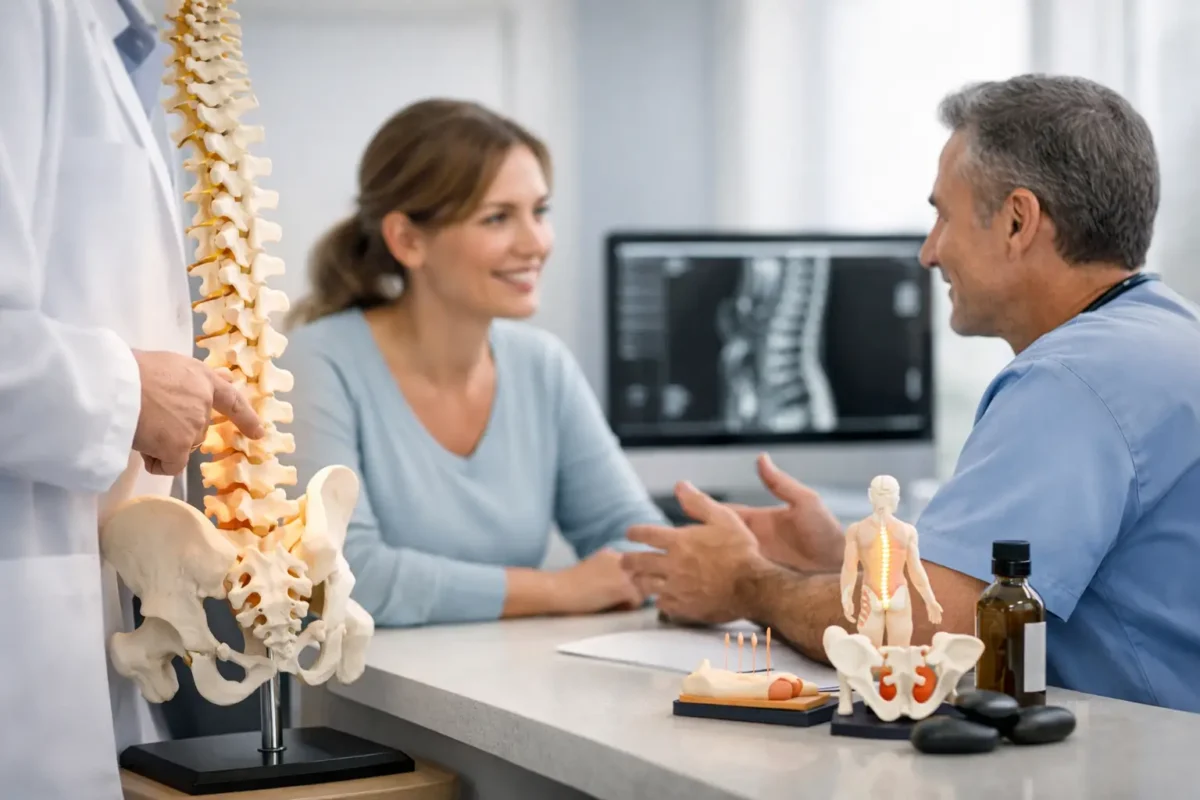
Back pain rarely stays in one lane. What starts as a stiff neck, sciatica, or low back flare can affect sleep, work, exercise, driving, and even simple tasks like getting dressed. That is why understanding how integrated spine care works matters. When spine care is coordinated instead of scattered across unrelated offices, patients get a clearer diagnosis, a more practical treatment plan, and a better chance of improving without unnecessary delays.
Integrated spine care is a team-based outpatient model built around one goal: treating the whole problem, not just one symptom or one scan result. Instead of sending a patient from office to office with limited communication between providers, this approach brings medical evaluation, conservative treatment, rehabilitation, and specialist input into a connected plan. For many adults dealing with back pain, neck pain, disc issues, pinched nerves, or injury-related symptoms, that coordination can make a meaningful difference.
What how integrated spine care works really means
At its core, integrated spine care means the providers involved in diagnosis and treatment are working from the same clinical picture. A patient may be evaluated by a physician, receive imaging or diagnostic testing if needed, begin physical therapy, and consult with pain management or a spine specialist without having to rebuild the story at every stop.
That continuity is more than a convenience issue. Spine conditions often overlap. A patient may have muscle guarding, joint restriction, nerve irritation, postural dysfunction, and reduced core stability at the same time. If each issue is treated in isolation, care can become fragmented. If the team is communicating directly, treatment is more likely to stay focused and efficient.
This model also supports a non-invasive-first philosophy. Not every disc bulge requires a procedure. Not every episode of sciatica needs surgery. In many cases, careful evaluation followed by targeted conservative care can reduce pain, restore function, and help patients return to normal activity more safely.
How integrated spine care works from first visit to recovery
The process usually begins with a detailed assessment. That includes symptom history, physical examination, and a review of how pain is affecting daily life. A strong spine evaluation is not just about where it hurts. It also looks at when symptoms started, what makes them worse, whether pain travels into the arms or legs, and whether there are signs of weakness, numbness, instability, or inflammation.
From there, the care plan is built around the likely cause of the problem. Some patients need imaging early because of trauma, severe neurologic symptoms, or persistent pain that is not improving. Others are better served by starting with conservative treatment while the team monitors progress. This is one of the strengths of integrated care – the next step is based on the patient in front of you, not a one-size-fits-all pathway.
Physical therapy is often central to the plan. For spine-related pain, therapy can help improve mobility, reduce guarding, strengthen supporting muscles, and retrain movement patterns that may be contributing to flare-ups. A therapist can also track how symptoms respond over time, which helps the rest of the team decide whether the current approach is working.
Pain management may be added when symptoms are limiting progress. That could include medication management, image-guided injections, or other targeted interventions designed to reduce inflammation and calm nerve irritation. The goal is not simply to mask pain. It is to create a window in which the patient can move better, participate in rehab, and avoid a cycle of worsening disability.
Some patients also benefit from chiropractic care or acupuncture as part of a broader plan. These services are not used as replacements for medical evaluation when red flags are present. But in the right case, they can support pain control, mobility, and recovery when coordinated with physician oversight and rehab.
If a patient is not improving as expected, the integrated model makes it easier to reassess. The team can revisit the diagnosis, adjust treatment, review imaging, and decide whether specialist consultation is needed. That is very different from a disconnected process where delays, repeated intake visits, and conflicting recommendations can stretch on for weeks.
Why coordination changes the patient experience
Many spine patients are not just dealing with pain. They are dealing with uncertainty. They want to know what is wrong, whether it is serious, how long recovery may take, and whether they can avoid surgery. Fragmented care often makes those questions harder to answer.
In an integrated setting, communication tends to be faster and more useful. The physician can see how the patient is responding in therapy. The therapist can flag concerning neurologic changes. The pain specialist can coordinate timing with rehabilitation. If surgical input becomes necessary, that recommendation is made in context, after conservative options have been considered and documented.
That structure also helps patients avoid common problems such as duplicate testing, mixed messaging, and treatment plans that compete with each other. One provider may tell a patient to rest completely while another recommends gradual movement. One office may focus only on a scan while another focuses only on symptoms. Good integrated care brings those perspectives together.
For working adults, parents, and older patients managing chronic conditions, convenience matters too. Receiving evaluation, treatment, and follow-up within a coordinated outpatient center can reduce lost time, lower stress, and make it easier to stay consistent with care.
When conservative care is enough – and when it is not
One of the biggest misconceptions about spine treatment is that patients have only two choices: live with the pain or have surgery. In reality, there is a wide middle ground. Many spine conditions respond well to evidence-based conservative care, especially when treatment starts before compensation patterns and chronic pain become more entrenched.
That said, integrated spine care is not anti-surgery. It is anti-unnecessary surgery. There are situations where surgical evaluation is appropriate, including progressive weakness, severe nerve compression, instability, certain traumatic injuries, or pain that remains disabling despite a well-executed non-surgical plan.
The benefit of an integrated model is that surgery is considered at the right time, for the right reason. Patients are not rushed toward it, but they are also not left cycling through ineffective treatment when clinical signs point to something more serious. That balance matters.
Who benefits most from this model
Integrated spine care can be especially helpful for adults with new injuries, recurring back or neck pain, degenerative spine conditions, radiating pain into the arms or legs, and post-accident musculoskeletal complaints. It also works well for patients whose symptoms affect multiple aspects of function, such as walking, lifting, sitting, sleeping, or returning to exercise.
Athletes and active adults often benefit because the plan can be shaped around movement goals, not just pain reduction. Older adults may benefit because age-related spine changes often overlap with arthritis, balance concerns, or deconditioning. Patients hurt in work injuries or motor vehicle accidents may appreciate having a team that can evaluate pain, support rehab, and track recovery in one coordinated setting.
For many people in Morris County, the appeal is practical as much as clinical. They want specialist-level care without feeling pushed from one disconnected office to the next. They want answers, a plan, and steady follow-through.
What to look for in an integrated spine program
Not every practice that offers several services is truly integrated. Real coordination means providers communicate directly, share clinical findings, and adjust care based on progress. It also means the treatment philosophy is clear: start with the least invasive evidence-based option that makes sense, escalate when needed, and keep the patient informed throughout.
A strong program should include thorough evaluation, access to diagnostics, rehabilitation, pain-focused treatment options, and specialist consultation when indicated. Just as important, it should treat patients with respect. Spine pain can be physically limiting and emotionally draining. Patients need expertise, but they also need to feel heard.
At Denville Medical Associates, that coordinated outpatient model is designed to help patients move from diagnosis to treatment and recovery with less confusion and better continuity. The value is not just having many services under one roof. It is having those services work together around the patient.
The best spine care is rarely about one appointment or one provider. It is about building the right sequence of care, adjusting when needed, and helping people get back to daily life with less pain and more confidence. If your symptoms have been lingering, worsening, or sending you in circles, a more connected approach may be exactly what changes the path forward.