
Spinal Decompression Therapy Review for Back Pain
A persistent ache that travels from the low back into the buttock or leg can make sitting at work, driving through Morris County, or sleeping comfortably feel far more difficult than it should. A spinal decompression therapy review can help patients understand whether this non-surgical approach is a reasonable part of care – and where its limits are.
Non-surgical spinal decompression may provide relief for selected people with disc-related pain, nerve irritation, or certain degenerative spine conditions. It is not a cure-all, and it should not replace a careful medical evaluation. The best outcomes usually come when decompression is part of an individualized plan that addresses movement, strength, daily habits, and the specific source of pain.
What Is Non-Surgical Spinal Decompression?
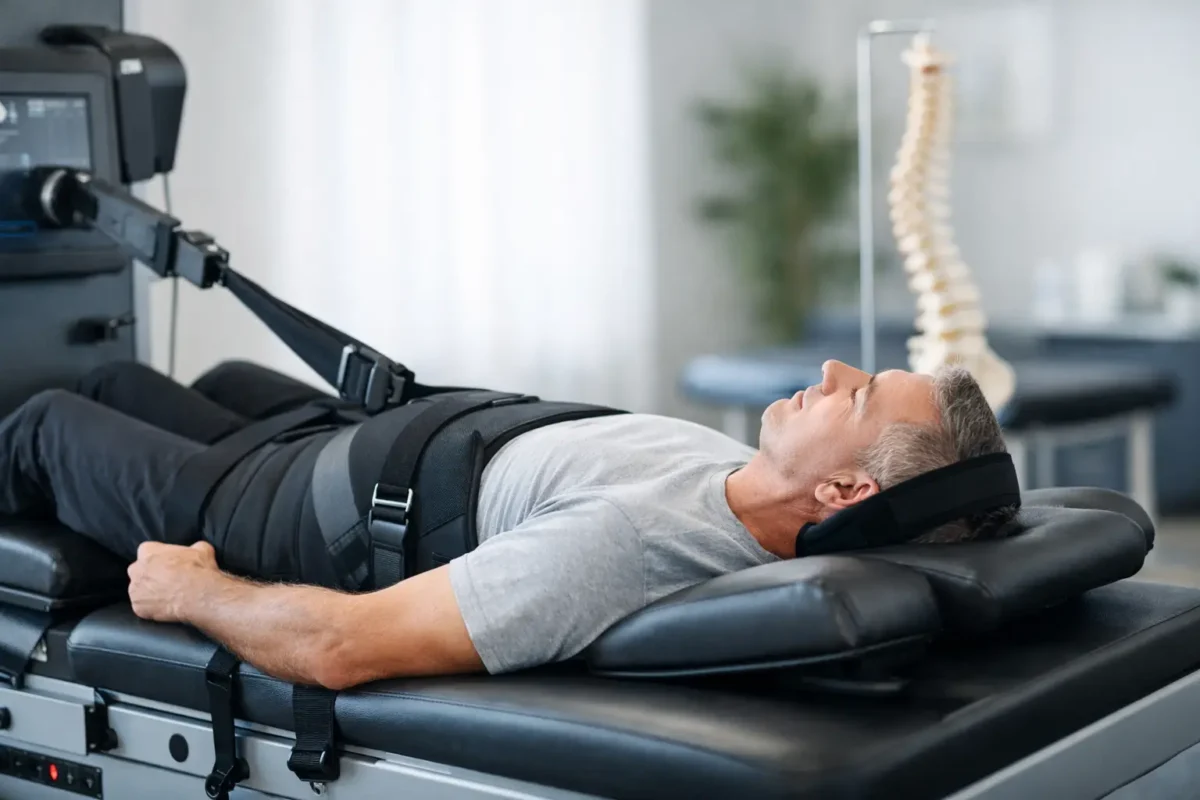
Non-surgical spinal decompression is a form of motorized traction. During treatment, a patient lies on a specialized table while a computerized system applies controlled pulling and relaxation forces to the spine. The goal is to gently reduce pressure on spinal structures, particularly the discs and nearby nerve roots.
A spinal disc acts as a cushion between vertebrae. When a disc bulges, herniates, or loses height over time, it can contribute to inflammation, stiffness, and nerve-related symptoms. By changing the forces across the spine, decompression may help some patients feel less pressure and pain. Treatment is commonly focused on the lumbar spine for low back and leg symptoms, although cervical protocols may be considered for certain neck conditions.
This treatment is different from surgical decompression. Surgery may remove or alter tissue that is compressing a nerve. Non-surgical decompression uses external traction and does not physically repair a disc or remove a bone spur.
Spinal Decompression Therapy Review: Potential Benefits
The most meaningful question is not whether a decompression table works for everyone. It is whether it may help a particular patient return to valued activities with less pain and better function.
Some patients report a gradual reduction in low back pain, sciatica-like leg pain, stiffness, or discomfort with prolonged sitting. Others find that they can tolerate physical therapy exercises more comfortably after their symptoms calm down. For people whose pain is aggravated by spinal loading, a controlled traction-based treatment may be a useful conservative option.
The potential benefits are practical as well. Sessions are outpatient, noninvasive, and do not involve an injection or anesthesia. For a working adult, parent, athlete, or older adult trying to maintain independence, this can be appealing when the appropriate clinical goal is to reduce symptoms while building a stronger, more resilient back.
Still, results vary. A person with acute muscle strain may not need decompression at all. Someone with severe nerve compression, progressive weakness, or spinal instability may need a different level of care. The diagnosis matters more than the marketing language around any single treatment.
What does the evidence say?
Research on traction and non-surgical decompression is mixed. Some studies suggest that certain patients with lumbar disc herniation or nerve-root symptoms may experience short-term pain relief, while other research has not shown consistent benefit across broad groups of people with low back pain.
That does not mean decompression has no place in care. It means clinicians should be precise about who is being treated, what symptoms are present, and how progress will be measured. Pain scores are useful, but so are functional changes: walking farther, returning to work duties, sleeping more comfortably, or needing less pain medication.
An evidence-based plan should include a defined trial period and a reassessment. If symptoms are not improving, the plan should change rather than continuing the same treatment indefinitely.
Who May Be a Candidate?
A thorough evaluation can determine whether decompression is appropriate. It may be considered for some patients with disc bulges or herniations, degenerative disc changes, chronic low back pain with radiating leg symptoms, or spinal narrowing that has been evaluated and is being managed conservatively.
Candidates typically have symptoms that match examination findings and, when needed, diagnostic imaging. A clinician will also consider the duration of pain, past treatments, work demands, activity goals, and whether physical therapy, chiropractic care, medication management, or other conservative options should be included.
At Denville Medical Associates, coordinated care allows patients to be evaluated across disciplines when appropriate. A pain specialist, spine provider, physical therapist, chiropractor, or other member of the care team can communicate directly about the treatment path, helping avoid fragmented referrals and unnecessary delays.
When decompression may not be appropriate
There are situations in which spinal decompression should be avoided or carefully reconsidered. These can include fracture, spinal infection, cancer affecting the spine, severe osteoporosis, significant spinal instability, certain implants, abdominal aortic aneurysm, and pregnancy. Individual circumstances matter, so patients should disclose their full medical history before treatment begins.
Urgent symptoms require prompt medical attention rather than a routine decompression appointment. New loss of bowel or bladder control, numbness in the groin or saddle area, rapidly worsening weakness, fever with severe back pain, or pain after major trauma can signal a serious condition. These symptoms need immediate evaluation.
What a Treatment Plan Should Include
Decompression is most useful when it is not treated as a stand-alone answer. A complete plan begins with an accurate diagnosis and clear goals. It may then pair decompression with guided exercise, manual therapy when indicated, posture and ergonomic coaching, activity modification, and strategies to manage inflammation or nerve pain.
Physical therapy is particularly valuable because symptom relief alone does not necessarily restore spinal control or strength. A therapist can help improve hip mobility, core endurance, lifting mechanics, and tolerance for the movements that matter in daily life. For an athlete, that may mean a progressive return to training. For an office worker, it may mean sitting and commuting with fewer flare-ups.
Treatment schedules vary, but a course often involves multiple sessions over several weeks. This is another reason to discuss expectations upfront. Patients should know the expected timeframe, the financial and insurance considerations, and the measures that will determine whether continuing care makes sense.
Questions to Ask Before Starting
Before choosing care, ask what diagnosis is being treated and why decompression is recommended for that diagnosis. Ask what other conservative options are available, how progress will be tracked, and what would prompt a referral for advanced imaging, injection-based care, or surgical consultation.
It is also reasonable to ask about risks and alternatives. Non-surgical decompression is generally well tolerated, but some people experience temporary soreness or an increase in symptoms. A qualified provider should explain how the treatment will be adjusted if discomfort occurs.
Be cautious of promises that a machine can permanently correct every disc problem or eliminate the need for surgery in every case. Responsible spine care is more individualized. Many patients improve without surgery, while some need a surgical opinion because their anatomy or neurologic symptoms call for it.
The Bottom Line for Patients With Back or Leg Pain
A balanced spinal decompression therapy review leads to a practical conclusion: this therapy may be worth considering for properly selected patients, especially when it is integrated with rehabilitation and ongoing clinical assessment. It is not a substitute for diagnosis, and it is not the right fit for every source of back pain.
If pain is limiting your work, exercise, sleep, or ability to enjoy daily life, the next useful step is a comprehensive evaluation. A clear diagnosis and a coordinated conservative plan can help you make decisions based on your condition, your comfort, and the activities you want to get back to.