
A Guide to Lumbar Spinal Stenosis Relief
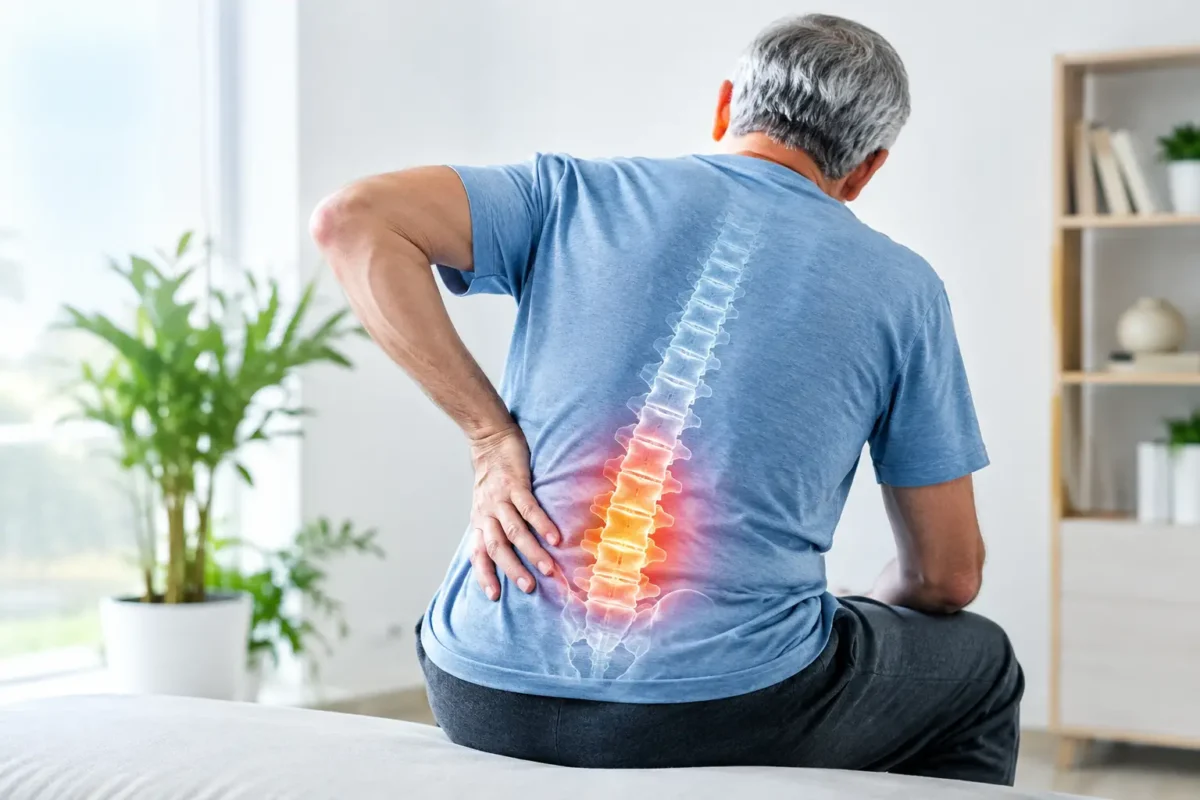
Walking through a grocery store, standing at the kitchen counter, or keeping up with grandchildren should not require planning every rest stop. This guide to lumbar spinal stenosis explains why these everyday activities can become painful, what symptoms deserve prompt attention, and how a coordinated, non-surgical-first treatment plan can help many people move more comfortably.
What lumbar spinal stenosis means
Lumbar spinal stenosis is a narrowing of the spaces in the lower back where the spinal nerves travel. The lumbar spine supports much of the body’s weight and allows bending, lifting, and walking. When the spinal canal or the openings where nerves exit become too narrow, nearby nerve tissue can become compressed or irritated.
For many adults, this narrowing develops gradually as part of normal spinal aging. Discs may lose height, facet joints can become arthritic and enlarged, ligaments may thicken, and small bone spurs can form. Any one of these changes, or a combination of them, may reduce the room available for the nerves.
Stenosis is common on imaging studies, especially after age 50, but an MRI finding alone does not tell the whole story. Some people have visible narrowing with few or no symptoms. Others have symptoms that significantly limit walking despite changes that appear modest on a scan. Effective care connects the imaging findings with the patient’s pain pattern, physical examination, health history, and daily goals.
Symptoms of lumbar spinal stenosis
The classic symptom is neurogenic claudication, which means leg discomfort brought on by standing or walking and eased by sitting or bending forward. A person may notice they can walk farther while leaning on a shopping cart, cycling, or walking slightly hunched forward. That position can temporarily create more room around the nerves.
Symptoms vary. Some patients feel aching, heaviness, cramping, burning, tingling, or numbness in one or both buttocks, thighs, calves, or feet. Low back pain may be present, but leg symptoms are often the main limitation. In more focused nerve compression, pain can travel down one leg in a pattern commonly described as sciatica.
Symptoms can also resemble circulation problems, hip arthritis, peripheral neuropathy, or muscle and joint conditions. Vascular claudication, for example, causes leg pain from reduced blood flow and may not improve as reliably when a person bends forward. That is one reason a careful evaluation matters before assuming that lumbar stenosis is the cause.
When to seek urgent medical attention
Most lumbar spinal stenosis can be assessed in an outpatient setting, but certain symptoms need immediate medical evaluation. Seek emergency care for new loss of bowel or bladder control, numbness in the groin or inner thighs, rapidly worsening leg weakness, or severe symptoms following a major injury. These may signal serious nerve compression that should not wait for a routine appointment.
How lumbar spinal stenosis is diagnosed
A clinician begins by listening closely to when symptoms occur and what relieves them. Details such as walking tolerance, balance changes, leg weakness, sleep disruption, prior injuries, and medication use help shape the next steps. The physical examination may include checking strength, sensation, reflexes, gait, balance, hip motion, and circulation in the legs.
X-rays can show alignment, arthritis, instability, and disc-height changes. MRI is often the most useful study for evaluating discs, nerves, ligaments, and the degree and location of narrowing. A CT scan may provide additional detail about bone anatomy, particularly when MRI is not an option or surgical planning is being considered. In select situations, electrodiagnostic testing can help distinguish a spine-related nerve problem from peripheral neuropathy.
Testing should answer a clinical question, not simply generate a report. The meaningful question is whether the area of narrowing matches the symptoms and exam findings. This approach helps prevent treatment based on an image rather than the person experiencing the pain.
A guide to lumbar spinal stenosis treatment options
Treatment depends on symptom severity, neurological findings, overall health, imaging results, and personal goals. Someone whose discomfort occurs only after long walks may need a different plan than someone who cannot stand long enough to prepare a meal. In many cases, care starts conservatively because symptoms can improve without surgery.
Physical therapy and movement-based care
Physical therapy is often central to treatment. A tailored program may focus on core and hip strength, mobility, posture, balance, endurance, and body mechanics for work or home activities. Flexion-tolerant exercises may feel better for some people with stenosis, but there is no single exercise program that fits every back.
The goal is not to tell patients to push through nerve pain. It is to build tolerance gradually, identify movements that aggravate symptoms, and find safe ways to remain active. Short, frequent walks, a stationary bike, pool exercise, or a structured home program may be more manageable than one long activity session. For some patients, chiropractic care, acupuncture, or other supportive therapies may be considered as part of a broader plan when clinically appropriate.
Medication and targeted pain procedures
Medication may help control pain enough to support sleep, activity, and rehabilitation. Options can include anti-inflammatory medication when safe, acetaminophen, topical treatments, or selected nerve-pain medications. The right choice depends on kidney function, stomach and heart history, other prescriptions, and the nature of the symptoms. Medication can be useful, but it is usually most effective when paired with an active recovery plan rather than used as the only strategy.
For persistent radiating leg pain, image-guided epidural steroid injections or other targeted spine procedures may reduce inflammation around irritated nerves. Relief is variable: some patients gain meaningful improvement for weeks or months, while others receive little benefit. An injection does not reverse structural narrowing, but it can create a window for physical therapy and help clarify which area is producing symptoms.
When surgery may be appropriate
Surgery is not automatically necessary because an MRI shows stenosis. It may be considered when well-directed conservative care has not restored acceptable function, when leg symptoms substantially limit daily life, or when progressive weakness or other neurological changes are present.
The most common operation is decompression, often called laminectomy, which removes bone or thickened tissue to create more room for the nerves. Some patients also need stabilization or fusion if there is meaningful spinal instability, deformity, or a slip of one vertebra over another. Fusion can be valuable in the right situation, but it typically involves a longer recovery and is not needed for every patient.
A spine surgeon should discuss the expected benefit, recovery timeline, alternatives, and potential risks in terms that fit the individual case. Surgery often improves leg symptoms and walking tolerance more reliably than longstanding low back pain alone. Setting that expectation early supports a more informed decision.
Protecting mobility while managing symptoms
Living with lumbar spinal stenosis often means adjusting activity without giving up on it. Avoiding all movement can lead to deconditioning, stiffness, and reduced confidence. At the same time, repeatedly forcing activities that trigger severe leg pain is rarely productive. A measured plan usually works better: change positions often, break tasks into shorter intervals, use supportive footwear, and progress exercise based on symptoms and function.
Weight management, smoking cessation, sleep, and management of conditions such as diabetes can also influence recovery and procedural safety. These are not quick fixes, and they should never be presented as blame. They are practical health factors that can improve resilience and expand treatment options.
For patients in Denville and Morris County, coordinated care can reduce the frustration of repeating the same history across disconnected offices. At Denville Medical Associates, physical therapists, pain management specialists, diagnostic providers, and spine specialists can work from a shared understanding of the patient’s condition and response to care. That continuity helps keep treatment focused on measurable goals, such as walking farther, returning to work, or getting through the day with less interruption.
Questions worth bringing to your appointment
A productive appointment begins with specifics. Consider how far you can walk before symptoms begin, whether sitting changes the discomfort, which leg is affected, whether weakness is getting worse, and what treatments you have already tried. Bring imaging reports if you have them, along with a current medication list.
It is also reasonable to ask what findings support the diagnosis, whether another condition could be contributing, what improvement is realistic, and how progress will be measured. Clear answers make it easier to choose between continued conservative treatment, an injection, a specialist consultation, or surgery.
Lumbar spinal stenosis can narrow a person’s routine long before it narrows their options. With an accurate diagnosis, a plan that respects both symptoms and goals, and timely attention to new weakness or urgent warning signs, many people can take meaningful steps toward steadier movement and a more comfortable daily life.