
A Patient’s Guide to the Sacroiliac Joint
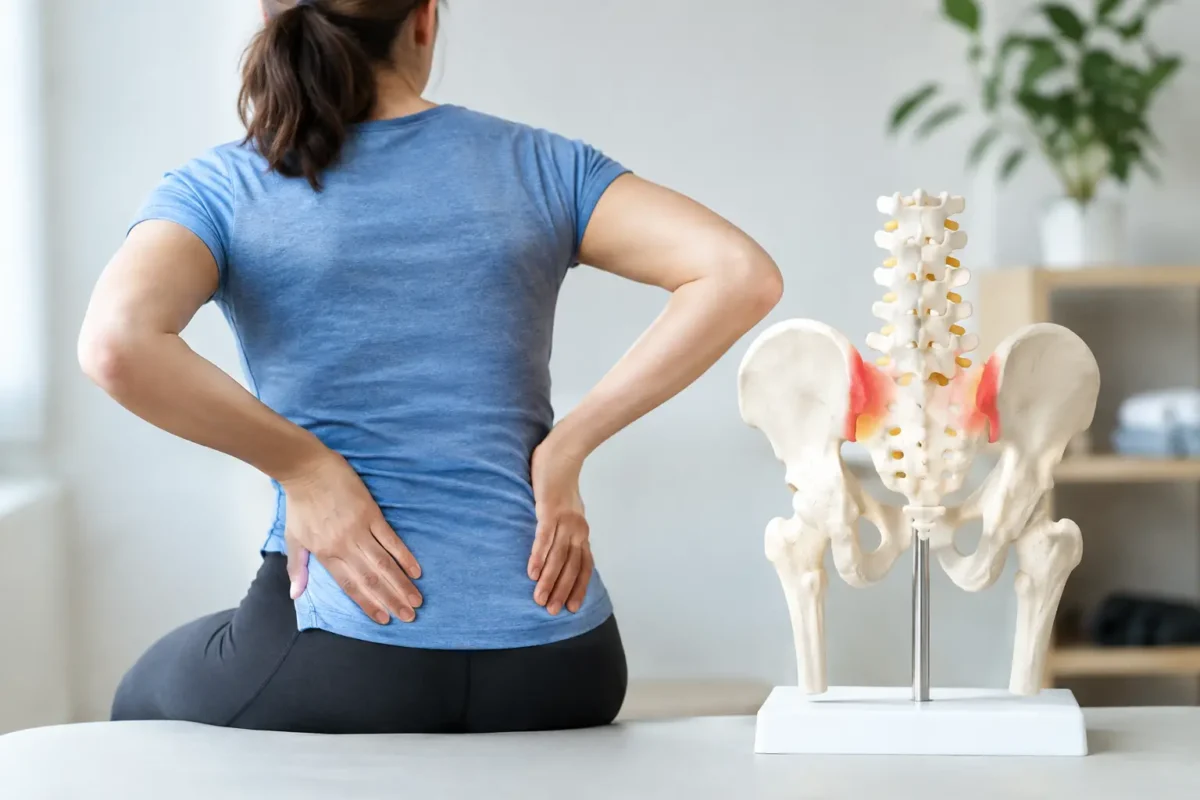
Pain low in the back, buttock, groin, or upper thigh can make ordinary movements feel uncertain. Getting out of a car, climbing stairs, standing at work, or turning in bed may all become difficult. This guide to sacroiliac joint problems explains where this often-overlooked joint is located, why it can cause pain, and how a coordinated care plan can help you return to more comfortable movement.
What Is the Sacroiliac Joint?
The sacroiliac, or SI, joints connect the triangular bone at the base of the spine, called the sacrum, to the large pelvic bones on either side. There is one SI joint on the right and one on the left. Although these joints move only a small amount, they have an important job: transferring force between the upper body and the legs while providing stability during walking, lifting, and changing positions.
Because the SI joints sit close to the low back, hip, and buttock, their pain can be mistaken for a lumbar disc problem, hip arthritis, muscle strain, or even sciatica. That overlap is one reason a careful evaluation matters. Treating the wrong pain source can delay recovery and leave patients frustrated when a seemingly reasonable treatment does not help.
A Guide to Sacroiliac Joint Pain and Function
SI joint pain is often felt on one side of the lower back or deep in the buttock, usually below the beltline. Some people feel pain into the groin, outer hip, or back of the thigh. It may be sharp when transitioning from sitting to standing, or it may feel like a persistent ache after a long day on your feet.
Symptoms vary from person to person, but patterns that can point toward SI joint involvement include pain with prolonged sitting or standing, discomfort when walking uphill or taking stairs, pain when rolling over in bed, and symptoms that worsen with single-leg movements. You may notice that putting on shoes, stepping into a vehicle, or carrying a child on one hip triggers discomfort.
Pain that travels below the knee, numbness, tingling, true leg weakness, or changes in bowel or bladder control can signal a different or more urgent condition. Those symptoms deserve prompt medical attention rather than self-treatment.
Why the SI Joint Can Become Painful
The SI joint can become irritated when its supporting ligaments, nearby muscles, or joint surfaces are overloaded. A single incident, such as a fall, sports injury, motor vehicle accident, or awkward lift, may start the problem. In other cases, pain develops gradually from repetitive strain, altered movement patterns, arthritis, or age-related changes.
Pregnancy and the postpartum period can also affect SI joint stability because hormonal changes relax pelvic ligaments. Leg-length differences, scoliosis, prior spine surgery, hip problems, and weak or poorly coordinated core and hip muscles can change how force moves through the pelvis. For active adults, a sudden increase in running mileage, cycling, strength training, or field sports may contribute.
There is not always one clear cause. A useful treatment plan looks at both the irritated joint and the movement habits or structural factors that may be keeping it irritated.
How SI Joint Problems Are Diagnosed
There is no single symptom, X-ray, or exam maneuver that proves the SI joint is the source of pain. Diagnosis typically begins with a detailed history. Your clinician will ask where the pain began, what activities aggravate it, whether there was an injury, and what treatments you have already tried.
The physical exam may include observing posture and walking, checking hip and lumbar spine motion, testing strength and flexibility, and performing several gentle stress maneuvers that load the SI joint in different ways. A cluster of positive findings is more useful than relying on one test alone.
Imaging can be valuable when the goal is to rule out other causes. X-rays may show arthritis or structural changes, while MRI or other advanced imaging may be considered when symptoms suggest a spinal, hip, inflammatory, or soft-tissue condition. However, imaging findings do not always match a person’s pain. Many adults have age-related changes on scans without symptoms.
When the diagnosis remains unclear, a carefully placed image-guided SI joint injection may serve two purposes. It can reduce inflammation and help confirm whether the joint is a significant pain generator. Meaningful short-term relief after the anesthetic portion of an injection can provide useful diagnostic information, but it is considered alongside the full clinical picture.
Conservative Treatment Usually Comes First
Most SI joint pain improves without surgery. The right approach depends on the cause, severity, duration of symptoms, and whether another condition is contributing. Early care generally focuses on settling pain while restoring confidence in movement.
Physical therapy is often central to recovery. Rather than simply strengthening every muscle around the pelvis, therapy should identify which movements are painful, where stability or mobility is lacking, and how you can safely return to daily activities. A personalized program may include core and hip strengthening, gait training, controlled mobility work, manual therapy, and guidance on pacing activity.
For some patients, chiropractic care or acupuncture may be appropriate adjuncts within a coordinated plan, particularly when muscle tension and movement restriction are contributing to symptoms. Heat or ice may provide temporary comfort. Over-the-counter anti-inflammatory medication can help some people, but it is not appropriate for everyone, especially those with kidney disease, ulcers, certain heart conditions, or medication interactions. A clinician can help determine safer options.
An SI belt may offer short-term support for selected patients, including some postpartum patients or people who feel better with external pelvic compression. It is not a replacement for rehabilitation, and prolonged use without a strengthening plan may leave underlying movement issues unaddressed.
When Procedures May Be Considered
If pain continues despite a well-designed conservative plan, pain management procedures may be discussed. Image-guided SI joint injections can reduce inflammation and may create a window for more productive rehabilitation. For persistent pain linked to the nerves around the joint, radiofrequency ablation may be an option for some patients.
Surgical SI joint fusion is generally reserved for carefully selected people with chronic, confirmed SI joint dysfunction that has not responded to non-invasive care and appropriate interventions. It is not the first answer for routine low back or buttock pain. A surgical opinion should include a thorough review of the diagnosis, other potential pain sources, overall health, and realistic recovery expectations.
What You Can Do Between Visits
Staying completely still often makes back and pelvic pain harder to manage. Gentle, regular movement is usually more helpful than cycles of overdoing it on a good day and resting for several days afterward. Short walks on level ground, position changes during desk work, and avoiding repeated twisting or heavy lifting during a flare can be sensible starting points.
Pay attention to patterns rather than trying to push through every symptom. If a specific activity consistently causes sharp pain, modify it until you have professional guidance. This does not mean avoiding activity forever. It means choosing a manageable level of movement while your body rebuilds tolerance.
Sleep positioning can also matter. Many people are more comfortable on their side with a pillow between the knees, or on their back with a pillow under the knees. These adjustments do not fix the joint, but they can reduce strain and help you rest more comfortably.
The Value of Coordinated Evaluation
SI joint pain rarely exists in isolation. The lumbar spine, hips, pelvic muscles, nerves, and daily movement demands all influence one another. A patient with buttock pain after a car accident may need a different plan than a runner with gradual symptoms or an older adult with arthritis and hip stiffness.
At Denville Medical Associates, patients can be evaluated through an integrated model that brings pain management, spine expertise, physical therapy, chiropractic care, sports medicine, diagnostics, and other services into one coordinated setting. This allows the care team to adjust the plan as symptoms and function change, without sending patients through a disconnected series of referrals.
If low back or buttock pain is limiting your work, exercise, sleep, or independence, a focused evaluation can replace uncertainty with a practical next step. The goal is not simply to quiet pain for a day, but to help you move with greater comfort, stability, and confidence in the activities that matter to you.