
Is EMG Painful? What the Test Actually Feels Like
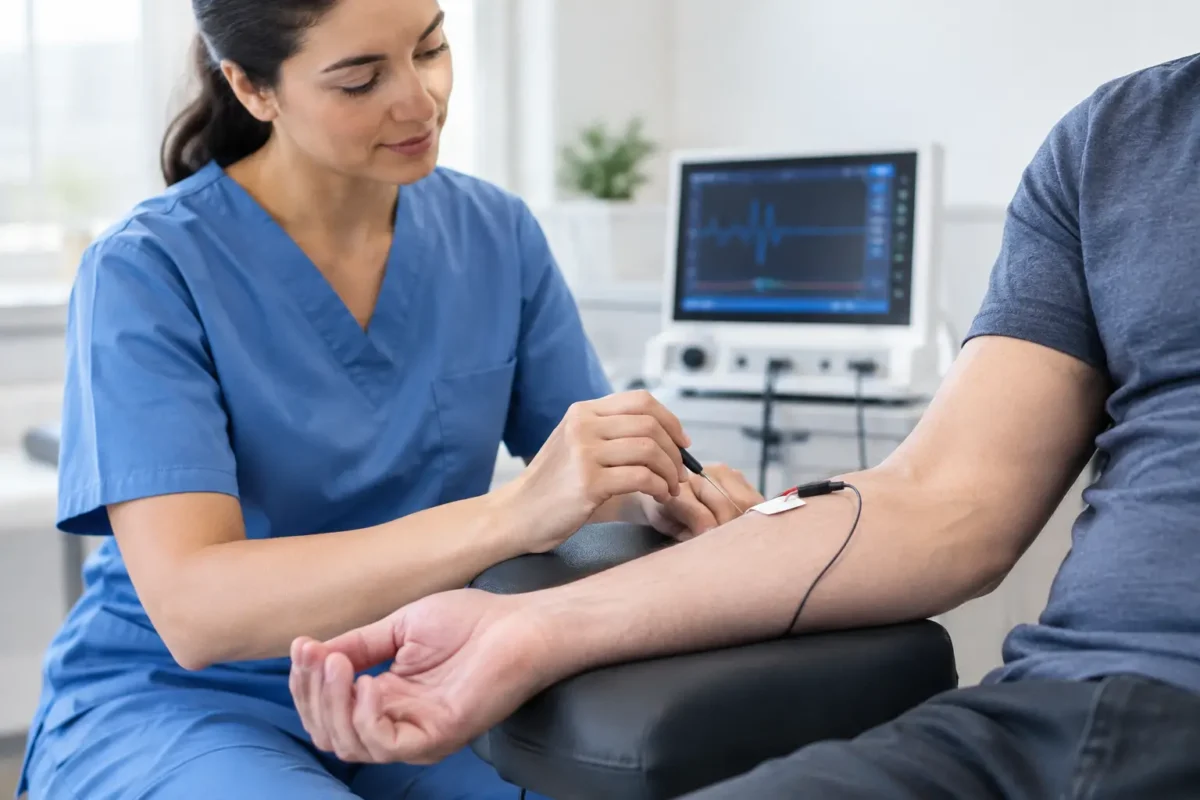
If you have been scheduled for an electromyography test, you may be asking, “is EMG painful?” It is a reasonable concern, especially when numbness, tingling, weakness, or radiating pain has already made daily life difficult. An EMG can be uncomfortable for some people, but it is generally brief, well tolerated, and designed to provide answers that can lead to a more focused treatment plan.
An EMG is often paired with a nerve conduction study. Together, these tests help your physician understand whether symptoms may be coming from a nerve, a muscle, the spine, or another part of the nervous system. Knowing what each portion feels like can make the appointment far less intimidating.
Is EMG Painful? Usually Uncomfortable, Not Severe
People experience an EMG differently. Most describe the nerve conduction portion as a quick tapping, buzzing, or snapping sensation. The needle EMG portion may feel like a small pinch when a very thin needle electrode is placed into selected muscles. There can be brief soreness while the muscle is tested, particularly if the area is already tender.
For most patients, the discomfort is temporary and manageable. The test does not involve injections of medication or prolonged needle placement. The needle is used to record the electrical activity naturally produced by your muscles, then removed.
The word “needle” can sound more alarming than the experience itself. The needles used for EMG testing are very fine, and a trained clinician works methodically, selecting only the muscles needed to answer the clinical question. You may be asked to relax a muscle and then gently tighten it for a few seconds while recordings are taken.
Pain tolerance, anxiety level, and the condition being evaluated can affect how the test feels. For example, a person with an acutely irritated nerve or a highly sensitive muscle may notice more discomfort than someone being evaluated for mild hand tingling. Let the clinician know if you are worried, lightheaded, or having more pain than expected. Clear communication allows the test to be paced appropriately.
What Happens During an EMG Appointment?
Electrodiagnostic testing commonly has two parts: nerve conduction studies and needle EMG. Depending on your symptoms, you may need one or both. A referral for an EMG does not automatically mean that a serious condition is suspected. It is a diagnostic tool used to clarify symptoms and guide care.
Nerve conduction studies
During a nerve conduction study, small electrodes are placed on the skin. A mild electrical pulse stimulates a nerve, and the equipment measures how quickly and effectively the nerve sends a signal. The sensation is brief. Many patients compare it to a static shock or the sudden twitch that occurs when you bump your elbow.
The intensity may be adjusted to obtain clear results, but each stimulation lasts only a moment. The testing clinician can explain what is happening before each series of pulses, which is often helpful for patients who are nervous about the sensation.
Needle EMG
For the needle portion, the skin is cleaned and a fine, sterile electrode needle is inserted into specific muscles. You may feel a quick prick when the needle enters. Once in place, you may be asked to rest, move, or gently contract the muscle.
The clinician listens to and records muscle activity at rest and during movement. Each needle is used briefly, and the number of muscles tested depends on your symptoms and the part of the body being evaluated. A study for possible carpal tunnel syndrome is often different in length and scope from one evaluating leg weakness or suspected nerve irritation from the lower back.
Why Your Physician May Recommend EMG Testing
EMG and nerve conduction testing can help distinguish between several conditions that may produce similar symptoms. For instance, hand numbness may relate to carpal tunnel syndrome, a pinched nerve in the neck, peripheral neuropathy, or another issue. Leg pain and weakness may be associated with a lumbar nerve root problem, a peripheral nerve injury, or a muscle disorder.
The results may help evaluate concerns such as:
- Numbness, tingling, burning, or unexplained weakness
- Suspected carpal tunnel syndrome or ulnar nerve compression
- Sciatica-like symptoms, neck pain with arm symptoms, or possible pinched nerves
- Peripheral neuropathy, including neuropathy associated with diabetes
- Muscle disorders, nerve injuries, or certain movement-related symptoms
Accurate testing can prevent guesswork. Rather than treating every symptom as though it comes from the spine, joint, or muscle, your care team can use the findings alongside your examination, medical history, and imaging when appropriate. This helps support conservative care when it is likely to help and specialist guidance when a more specific intervention is needed.
How to Make an EMG More Comfortable
You do not need to do much to prepare, but a few practical steps can improve the experience. Bathe or shower beforehand, and avoid applying lotion, oil, or cream to the area being tested. These products can make it harder for surface electrodes to adhere to the skin.
Wear comfortable clothing that allows access to the body part being evaluated. You may be asked to change into a gown for testing of the back, shoulder, hip, or upper leg. Try to eat and hydrate normally unless your physician gives you different instructions.
Tell the testing clinician about medications, especially blood thinners, as well as any bleeding disorder, implanted cardiac device, or history of fainting with needles. These details do not always prevent testing, but they may affect how the study is planned. Do not stop prescribed medication unless the physician managing that medication tells you to do so.
If anxiety is your biggest concern, say so at the start of the visit. Many people feel better when they know which muscle is being tested and when a brief sensation is coming. Slow breathing and relaxing the tested limb can also reduce muscle tension and make needle insertion easier.
What to Expect After the Test
Most people can return to work, driving, exercise, and normal routines immediately after an EMG. You may have minor tenderness or a small bruise at a few needle sites, similar to what you might feel after a vaccination or blood draw. This typically improves within a day or two.
A warm compress, gentle movement, or an over-the-counter pain reliever that is safe for you may help with mild soreness. Contact your physician if you develop significant swelling, increasing redness, persistent bleeding, fever, or severe pain. These complications are uncommon, but new or worsening symptoms deserve medical guidance.
The test itself is only one part of the diagnostic process. Results need to be interpreted in context. A normal EMG does not rule out every possible cause of pain, and an abnormal finding does not always mean surgery is necessary. The next step may be physical therapy, medication management, activity modification, targeted injections, further imaging, or consultation with a spine, pain, or neurological specialist.
A Clear Result Can Make the Temporary Discomfort Worthwhile
When you are living with persistent tingling, weakness, or pain that travels into an arm or leg, uncertainty can be as frustrating as the symptoms themselves. EMG testing can provide objective information about how your nerves and muscles are functioning, helping your care team avoid an overly broad or disconnected approach.
At Denville Medical Associates, coordinated evaluation allows physicians and rehabilitation providers to consider EMG findings alongside your symptoms, mobility, imaging, and recovery goals. The focus is on identifying the source of the problem and starting with the least invasive treatment that fits your needs.
If an EMG has been recommended, ask what question the test is intended to answer and which body areas will be evaluated. Knowing the purpose of the study can shift the appointment from something to fear into a practical step toward clearer answers and more confident care.