How to Find the Best Physical Medicine and Rehabilitation
Back pain that lingers for months, a shoulder injury that never quite heals, numbness after a car accident, stiffness that makes simple movement harder than it should be – these problems do not just disrupt comfort. They interfere with work, sleep, exercise, and independence. When people search for the best physical medicine and rehabilitation, they are usually not looking for a trendy label. They want a clear path to feeling better, moving better, and avoiding unnecessary procedures if possible.
That search can be confusing because many clinics use similar language while offering very different levels of care. Some focus only on therapy. Others only manage pain. Some quickly refer patients elsewhere for imaging, specialist input, or follow-up treatment. The best care is usually more coordinated than that, especially when pain, mobility loss, nerve symptoms, or sports and work injuries overlap.
What the best physical medicine and rehabilitation should actually provide
Physical medicine and rehabilitation is centered on restoring function. That sounds simple, but in practice it means much more than treating symptoms for a week or two. The goal is to help patients recover strength, mobility, stability, and confidence while addressing the medical reason those problems developed in the first place.
The best physical medicine and rehabilitation program should start with a careful evaluation, not a generic plan. Two people may both have low back pain, yet one has a disc issue, another has muscle imbalance, and a third has pain driven by arthritis and poor mechanics. If every patient receives the same exercise sheet or the same injection discussion, care is not truly individualized.
Strong rehabilitation also connects diagnosis with treatment. That may include physician evaluation, imaging when appropriate, physical therapy, pain management, sports medicine, chiropractic support, or other conservative options that work together instead of competing. For many patients, the difference between stalled progress and meaningful recovery comes down to whether their providers are communicating with each other.
Why integrated care often leads to better recovery
Rehabilitation tends to work best when it is not fragmented. A patient with neck pain and arm tingling may need diagnostic clarity, hands-on therapy, guided exercise progression, and possibly pain intervention if symptoms are limiting participation. If those services are scattered across unrelated offices, care can become slow, repetitive, and frustrating.
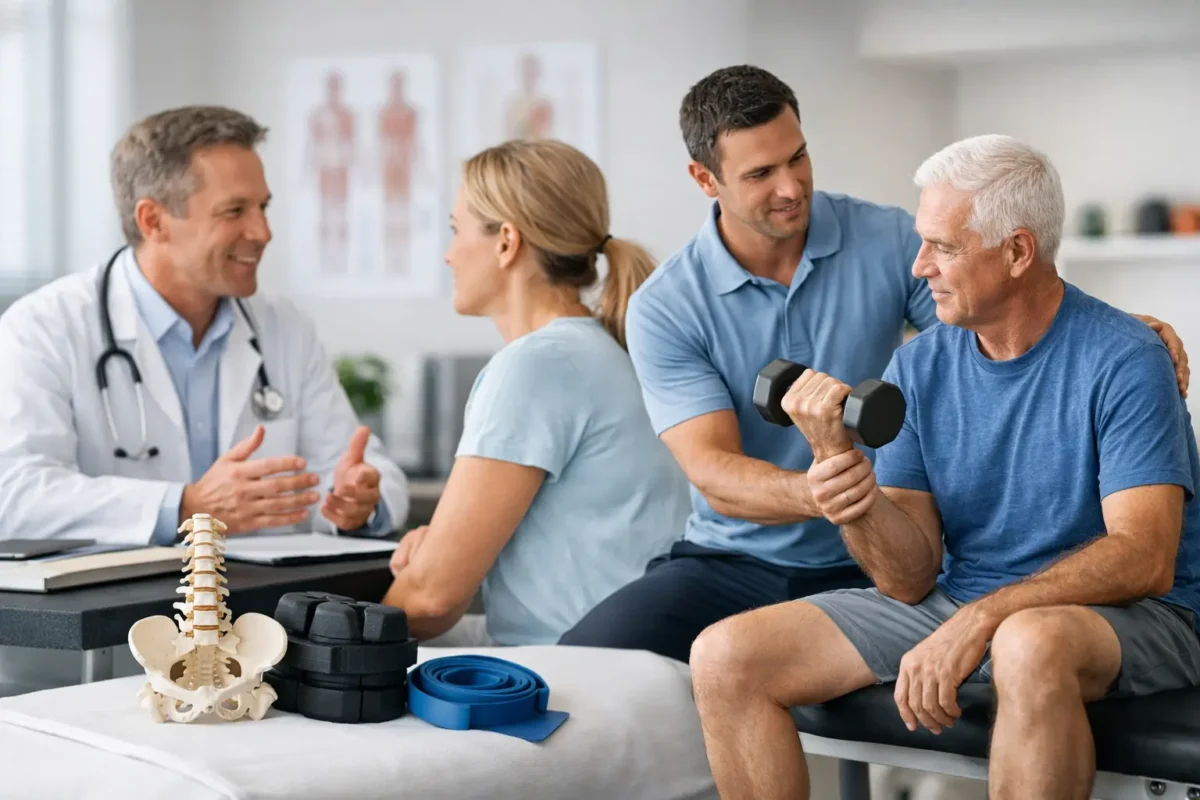
An integrated outpatient model helps reduce that friction. When board-certified physicians, therapists, and specialists collaborate directly, patients spend less time repeating their history and more time moving through a plan that makes sense. This is especially valuable for complex cases such as spine conditions, chronic pain, post-accident injuries, and sports-related overuse problems.
That does not mean every patient needs every service. It means the right services should be available when needed, without delays that prolong pain or push people toward emergency rooms and hospital systems for non-emergency musculoskeletal issues.
Signs you are choosing the best physical medicine and rehabilitation for your needs
One of the clearest signs is that the provider talks about function, not just pain scores. Pain matters, of course, but so does whether you can sit through a workday, climb stairs, lift groceries, return to the gym, or sleep without waking every hour. Good rehabilitation is measured by what you can do again.
Another sign is a non-invasive, evidence-based approach. Surgery and medication have an important role in the right cases, but they should not be the automatic first step for every back, joint, or nerve complaint. The best programs usually explore conservative treatment thoroughly while staying alert to red flags that require a higher level of intervention.
You should also expect a treatment plan that can adjust over time. Some patients improve quickly with guided therapy and home exercise. Others need a combination of rehabilitation and pain management to make progress. Some need specialist consultation because the original diagnosis turns out to be incomplete. Quality care does not force every case into one pathway.
Conditions that benefit from physical medicine and rehabilitation
Most people associate rehabilitation with post-surgical recovery or major injuries, but the field is much broader. It commonly helps with neck and back pain, sciatica, herniated discs, arthritis-related stiffness, joint instability, tendon injuries, sports strains, repetitive stress injuries, and mobility issues after accidents.
It can also be appropriate for older adults trying to preserve balance and function, active adults who want to return to exercise safely, and workers dealing with pain that affects performance or attendance. Chronic conditions often respond particularly well when care is coordinated because long-standing pain rarely has a single cause. Strength deficits, inflammation, movement compensation, and nerve irritation can all exist at the same time.
That is why a one-size-fits-all plan often falls short. A patient may need rehabilitation to rebuild function while also receiving targeted support for inflammation, spinal issues, or pain control. The best physical medicine and rehabilitation recognizes that recovery is rarely linear.
What to ask before starting treatment
Patients do not need to know every medical term to choose wisely, but a few questions can reveal a lot. Ask who will evaluate you first and whether your diagnosis will be reviewed if progress stalls. Ask what conservative treatments are available on-site and how providers communicate with each other. Ask whether the plan is built around measurable goals such as range of motion, walking tolerance, return to work, or activity level.
It is also reasonable to ask how the practice handles more advanced needs. If you require imaging, specialist consultation, or procedural pain care, can that be coordinated smoothly? If surgery becomes necessary, will someone help you understand why and when? Patients deserve a care pathway that is clear, not pieced together under pressure.
Convenience matters here more than many people realize. When appointments, diagnostics, and follow-up services are easier to access, patients are more likely to stay consistent with care. Consistency is often what turns early improvement into lasting results.
Why local access matters in Morris County
For adults in Denville, Rockaway, Parsippany, Randolph, Mountain Lakes, and surrounding communities, access is not a small detail. Long waits, multiple referrals, and travel between disconnected offices can delay care at the exact time early treatment matters most. That is particularly true after a workplace injury, sports injury, or motor vehicle accident, when symptoms can escalate quickly if they are not addressed properly.
Local outpatient care with coordinated specialists can make recovery more efficient and less stressful. Instead of navigating separate systems for evaluation, rehabilitation, pain relief, and specialty follow-up, patients can move through treatment with more continuity. That is one reason many people prefer a multidisciplinary setting such as Denville Medical Associates, where conservative treatment, specialist insight, and rehabilitation can be aligned around one patient goal – getting back to normal life as safely and quickly as possible.
The trade-offs patients should understand
Not every clinic that offers many services automatically delivers better care. More options only help if there is a thoughtful process behind them. Patients should be cautious of settings that recommend passive treatment indefinitely without measurable improvement, just as they should be cautious of settings that escalate too quickly to invasive care.
The right plan often lives between those extremes. Some cases improve with therapy alone. Some need short-term pain intervention to make therapy tolerable. Some truly require surgical evaluation after conservative care has been appropriately tried. Good rehabilitation respects those differences instead of pretending every problem has the same answer.
Insurance and scheduling can also shape the patient experience. A strong practice should help patients understand coverage, next steps, and treatment timing without making the process harder than it needs to be. Medical expertise matters, but so does operational efficiency when someone is already dealing with pain and uncertainty.
Choosing care that treats the whole recovery process
The best physical medicine and rehabilitation is not just about getting through your next appointment. It is about building a treatment plan that makes sense from the first evaluation through recovery milestones and, if necessary, specialist escalation. That means listening carefully, diagnosing accurately, prioritizing non-invasive care when appropriate, and keeping all parts of treatment connected.
When patients feel better informed, better supported, and better coordinated, outcomes often improve along with confidence. If you are weighing your options, look for a team that treats function as the goal, not just symptom suppression. The right rehabilitation program should help you see a realistic way forward – and make that path easier to follow.