
Best Treatments for Plantar Fasciitis That Work
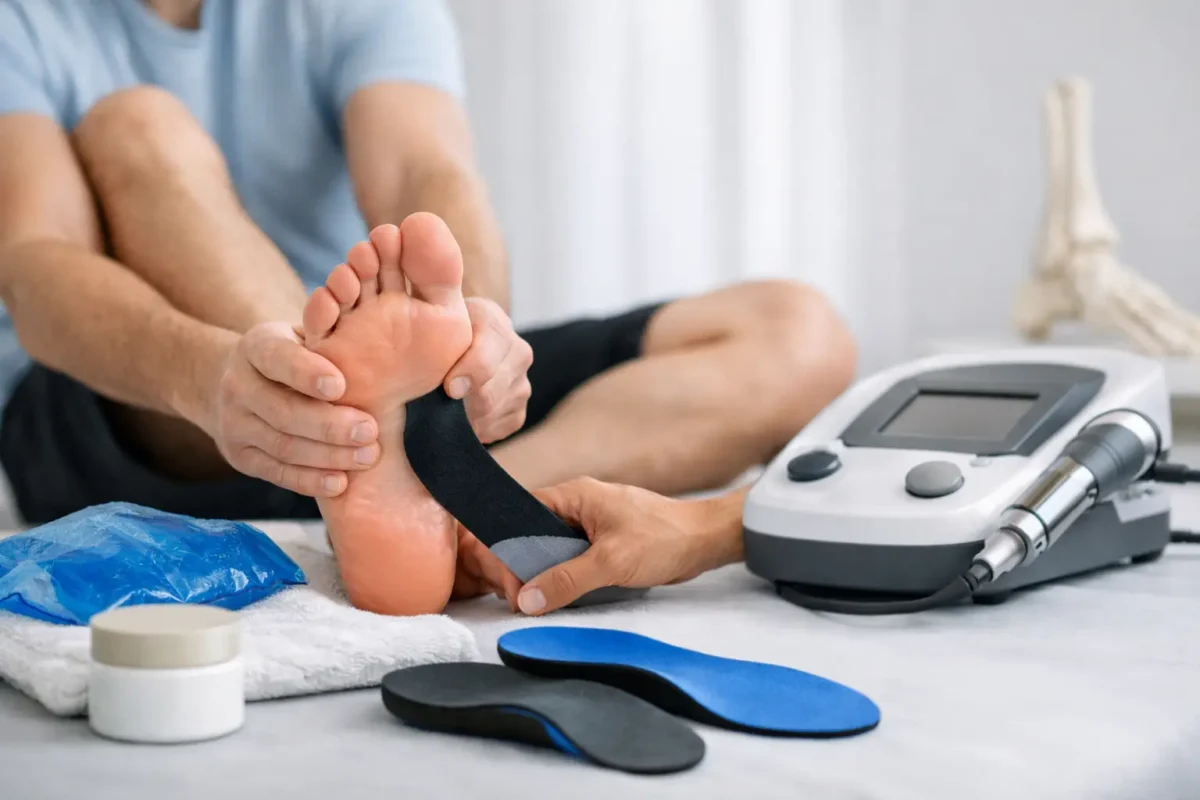
That first step out of bed can feel like a nail driven into the bottom of your heel. For many people, the pain eases after a few minutes of walking, then returns after a long shift, workout, or evening on their feet. The best treatments for plantar fasciitis address more than that painful spot. They reduce strain on the plantar fascia, restore ankle and foot mechanics, and help you return to activity without repeatedly aggravating the tissue.
Plantar fasciitis is irritation and degeneration of the thick band of connective tissue that runs from the heel to the toes. It is common among runners, people whose jobs require prolonged standing, adults with tight calves, and those whose activity level changes quickly. It can also affect anyone after a period of reduced activity, weight change, or wearing shoes that no longer provide adequate support.
Start With an Accurate Evaluation
Heel pain is not always plantar fasciitis. A stress fracture, nerve irritation, arthritis, Achilles tendon disorder, fat-pad irritation, or a systemic inflammatory condition can cause similar symptoms. A focused examination helps identify whether pain is centered at the inside-bottom edge of the heel, whether calf tightness is contributing, and whether walking mechanics or footwear are adding stress.
Imaging is not necessary for every new case. However, an X-ray, ultrasound, or other diagnostic study may be appropriate when symptoms are severe, follow an injury, fail to improve as expected, or raise concern for another condition. A heel spur on an X-ray does not automatically explain the pain or require treatment. Many people have heel spurs without symptoms.
This step matters because the most effective plan depends on the cause, duration, daily demands, and recovery goals. A runner preparing for an event needs a different return-to-impact plan than a teacher who stands all day or an older adult whose balance has changed because of pain.
Best Treatments for Plantar Fasciitis: A Layered Plan
Most patients improve without surgery, but recovery is rarely about one device, one treatment, or one week of rest. A coordinated plan usually combines load management, targeted mobility work, strengthening, and practical support for the foot.
Adjust Activity Without Becoming Inactive
Complete rest can temporarily settle symptoms, but prolonged inactivity may reduce calf and foot strength and make a return to walking or exercise harder. The better approach is to reduce the activities that reliably flare pain while maintaining movement that is tolerable.
For example, a runner may temporarily replace hills, speed work, and long runs with cycling, swimming, or lower-impact conditioning. Someone who stands at work may benefit from more frequent seated breaks, supportive footwear, and a gradual increase in time on their feet. Pain that becomes sharp, causes limping, or lingers significantly into the next day is a signal that the current load is too high.
Stretch the Plantar Fascia and Calf Muscles
Tight calf muscles limit ankle motion and increase pull through the heel. Gentle, consistent stretching can help, especially before the first steps of the day and after long periods of sitting.
A plantar fascia stretch is often done seated by crossing the affected foot over the opposite knee and gently pulling the toes back until tension is felt along the arch. Calf stretching can be performed with the knee straight to target the gastrocnemius and slightly bent to reach the deeper soleus muscle. The goal is a controlled stretch, not pain. Holding each position for about 20 to 30 seconds and repeating it regularly is generally more useful than an occasional aggressive session.
Rolling the sole of the foot over a chilled water bottle or small ball may provide short-term comfort. It should feel relieving, not bruising. More pressure is not necessarily better when the tissue is irritated.
Build Strength in the Foot, Ankle, and Hips
Stretching alone may not solve plantar fasciitis, particularly when symptoms have persisted for months. The plantar fascia works with the small muscles of the foot, calf, ankle, and hip to absorb force during walking and running. Weakness or poor control in these areas can keep overloading the heel.
A physical therapist can prescribe a progression that fits the individual. Early exercises may include towel scrunches, toe control, supported calf raises, and balance work. As symptoms improve, the program can advance to heavier calf strengthening, single-leg control, and sport- or work-specific drills.
The progression matters. Returning to long walks, running, court sports, or physically demanding work before the foot can tolerate force often creates a frustrating cycle of improvement and relapse. Measurable strength and mobility goals give patients a clearer path forward than simply waiting for pain to disappear.
Choose Footwear and Support Thoughtfully
Shoes do not need to be expensive to be useful, but worn-out soles, minimal cushioning, poor arch support, or a flexible shoe that twists easily can make symptoms worse. Many patients feel better in a stable shoe with adequate cushioning and a comfortable heel counter. Avoiding barefoot walking on hard floors during a painful flare is often helpful.
Over-the-counter heel cups or arch supports can reduce strain and may be enough for mild to moderate cases. Custom orthotics may be considered when foot structure, persistent symptoms, or occupational demands warrant more individualized support. Orthotics are tools, not cures. They work best alongside strengthening and activity modification rather than replacing them.
Consider a Night Splint for Morning Pain
Night splints hold the ankle and toes in a gently flexed position while sleeping. This can prevent the plantar fascia from tightening overnight and may reduce the severe first-step pain many patients experience in the morning. They are particularly reasonable for symptoms that have lasted several months or for patients whose mornings are consistently difficult.
Comfort is the trade-off. Some people sleep well in a splint, while others find it disruptive. A clinician can help determine whether a traditional boot-style splint or a less bulky option makes sense.
When Hands-On and Interventional Care May Help
Physical therapy is often central to recovery because it combines manual treatment, education, progressive exercise, and gait assessment. Depending on the findings, hands-on treatment to improve ankle, foot, and soft-tissue mobility may complement the active rehabilitation plan. Chiropractic care or acupuncture may also help some patients manage pain and move more comfortably, but these approaches should support, not replace, a structured loading program.
Anti-inflammatory medications can offer short-term relief for some people, provided they are safe with the patient’s medical history and other medications. They do not repair the underlying tissue problem, and persistent reliance on medication should prompt a reassessment of the treatment plan.
For stubborn cases, a pain management or sports medicine clinician may discuss options such as extracorporeal shock wave therapy, which uses sound waves to stimulate a healing response. Corticosteroid injections can reduce pain in selected situations, but repeated injections may weaken the plantar fascia and carry a small risk of rupture. They are not usually the first choice for a condition that often responds to rehabilitation.
Regenerative injections, including platelet-rich plasma, may be considered in certain chronic cases, although results and insurance coverage vary. These treatments deserve a balanced conversation about evidence, cost, expected recovery time, and alternatives.
Surgery Is Rarely the Starting Point
Surgery for plantar fasciitis is generally reserved for persistent, function-limiting pain that has not responded to a thorough course of conservative care. Before discussing surgery, clinicians should revisit the diagnosis, assess adherence to rehabilitation, and look for untreated biomechanical or medical contributors. The objective is not simply to quiet heel pain for a few weeks, but to restore durable walking, work, and exercise capacity.
An integrated setting can make this process less fragmented. At Denville Medical Associates, patients can move from evaluation and diagnostics to physical therapy, pain management, and specialist consultation with clinicians who can coordinate the plan around the same recovery goals.
Know When Heel Pain Needs Prompt Attention
Seek timely medical evaluation if heel pain follows a fall or sudden injury, if you cannot bear weight, or if the foot is red, hot, markedly swollen, numb, or weak. Pain accompanied by fever, an open wound, unexplained weight loss, or symptoms in multiple joints also deserves prompt assessment. People with diabetes, circulation problems, or reduced sensation in the feet should not try to self-treat persistent foot pain for long.
Heel pain can make ordinary routines feel smaller: the walk from the parking lot, a workout with friends, a shift at work, or playing on the floor with children. A patient-specific plan can help you protect the foot without putting your life on pause, then rebuild confidence one comfortable step at a time.