
Knee Rehabilitation for a Stronger Return to Motion
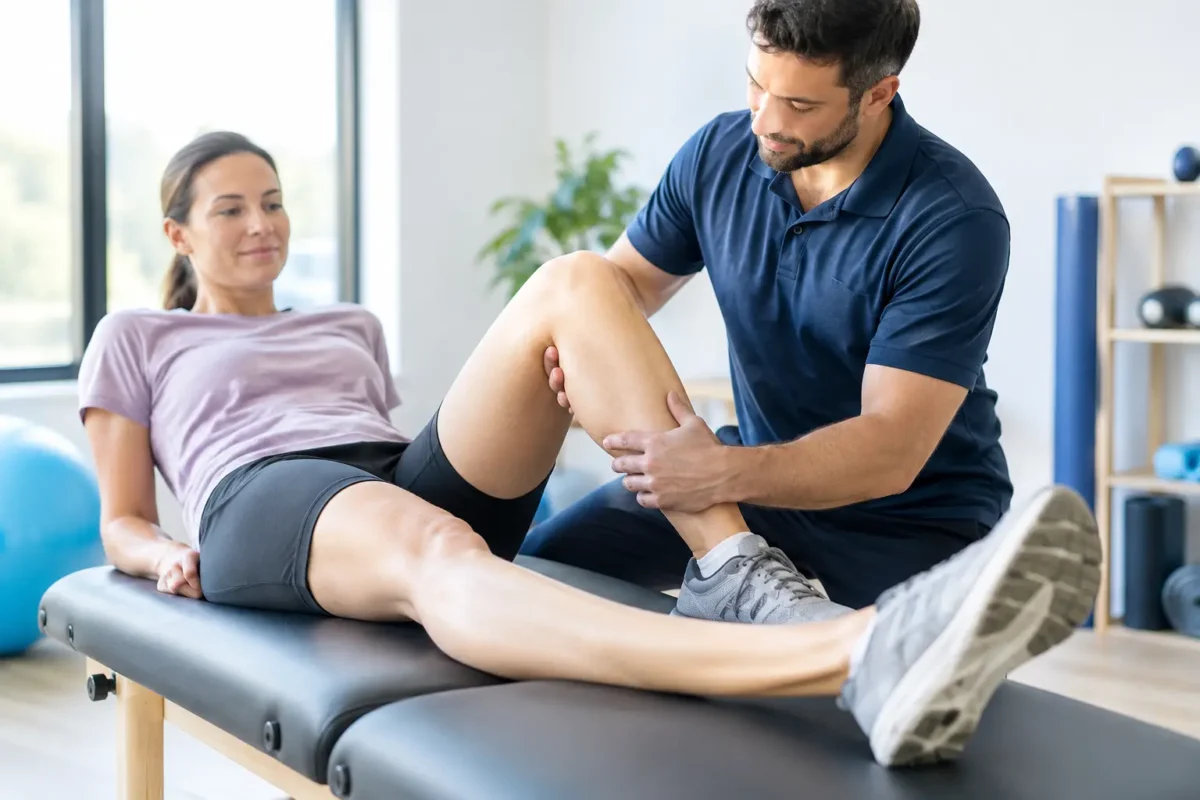
A knee that hurts on the stairs but feels manageable on flat ground is telling you something specific: it may tolerate certain loads, but not others. Effective knee rehabilitation begins by listening to those patterns instead of simply pushing through pain or resting indefinitely. Whether symptoms followed a sports injury, a fall, surgery, arthritis, or months of gradual wear, the goal is to help you move with greater comfort, control, and confidence.
The right plan is not a generic sheet of exercises. It is a progression built around your diagnosis, current function, work demands, activity goals, and the factors that may be slowing recovery. For some people, that means returning to a job that requires standing. For others, it means getting back to pickleball, running, or comfortably walking through a grocery store.
What Knee Rehabilitation Is Designed to Improve
Knee rehabilitation is a structured process for restoring function after injury, surgery, or a painful condition affecting the joint and surrounding tissues. Pain relief matters, but pain alone is not the only measure of progress. A knee can feel better before it is ready for a sudden pivot, a deep squat, or a long day on your feet.
A well-designed program addresses mobility, strength, balance, coordination, and tolerance for daily activity. It also considers how the hip, ankle, foot, and lower back influence the knee. Limited ankle motion, weak hip muscles, poor movement mechanics, or reduced balance can place extra stress on the knee even when the discomfort seems isolated to one area.
Rehabilitation commonly helps people recovering from ligament sprains or tears, meniscus injuries, patellar tendon problems, kneecap pain, osteoarthritis, fractures, and knee replacement surgery. The details matter. A plan for early arthritis should not look identical to a plan following ACL reconstruction, and neither should be based solely on a person’s age or fitness level.
Start With the Right Diagnosis
It is easy to label all knee discomfort as “wear and tear,” especially when pain comes and goes. Yet swelling after a twist, locking or catching, instability, warmth, loss of motion, or pain that persists despite rest can point to a problem that needs a closer evaluation.
An appropriate assessment may include a medical history, physical examination, gait and movement analysis, and diagnostic testing when clinically indicated. Providers look at where pain occurs, what triggers it, whether swelling is present, and how the knee responds to movements such as squatting, stepping down, or changing direction. This helps distinguish between issues that can usually begin with conservative care and those that may require specialist input.
For example, a person with mild knee arthritis may benefit substantially from strengthening and activity modifications. Someone whose knee repeatedly gives way after a traumatic injury may need a more detailed orthopedic or sports medicine evaluation before advancing exercise. Starting with the right diagnosis protects against both undertreatment and unnecessary intervention.
When to Seek Prompt Medical Care
Not every flare-up is an emergency, but certain symptoms deserve timely attention. Seek urgent evaluation for a visibly deformed knee, inability to bear weight after an injury, severe swelling, fever with a hot or red joint, calf swelling, new numbness, or severe pain that rapidly worsens. These symptoms can require care beyond a standard rehabilitation visit.
The Phases of a Personalized Recovery Plan
Recovery rarely moves in a perfectly straight line. A demanding weekend, a poor night of sleep, or a new exercise can temporarily increase soreness. What matters is the overall trend and whether the plan is adjusted when your symptoms or function change.
Calm symptoms without stopping all movement
Early care often focuses on reducing irritability in the knee while maintaining as much safe movement as possible. Depending on the condition, this may include temporary activity changes, hands-on therapy, targeted mobility work, bracing recommendations, or pain management options. Complete rest can be appropriate briefly after some injuries, but too much inactivity may contribute to stiffness and muscle weakness.
The aim is not to avoid every sensation. It is to identify the level and type of activity your knee can tolerate while the underlying issue is being addressed. Your care team may use pain, swelling, range of motion, and next-day response to guide that decision.
Restore motion and rebuild strength
Once symptoms are better controlled, rehabilitation typically shifts toward restoring motion and strength. The quadriceps are especially important for supporting the knee during walking, stair climbing, standing from a chair, and controlled landings. Hamstrings, gluteal muscles, calves, and core muscles also contribute to how force travels through the leg.
Exercises may begin with controlled, lower-load movements and advance to step-ups, squats, resistance training, balance drills, and other functional activities. The correct amount of challenge depends on your condition. After surgery, a protocol may set specific limits on weight bearing or knee bending. With chronic osteoarthritis, gradual exposure to strength training may be more useful than avoiding the joint out of fear.
Practice the movements your life requires
A knee does not need only to bend and straighten on an exam table. It needs to manage curbs, stairs, uneven ground, quick turns, lifting, and sometimes sport-specific demands. Later-stage rehabilitation should reflect the activities you want or need to resume.
An office worker may need strategies for managing stiffness after long periods of sitting. A warehouse employee may need training that prepares the knee for lifting and repeated walking. An athlete may need progressive jumping, deceleration, and direction-change drills before returning to competition. Returning too early can raise reinjury risk, while waiting too long without a progression can leave you feeling unnecessarily limited.
Why Coordinated Care Can Make Recovery Easier
Knee symptoms are not always solved by one service or one visit. You may need a physician’s evaluation, imaging coordination, physical therapy, sports medicine guidance, pain management, or surgical consultation if conservative treatment does not provide enough improvement. When those services operate separately, patients can spend weeks repeating their history and trying to connect the recommendations themselves.
At Denville Medical Associates, clinicians across disciplines can communicate directly and coordinate care in one outpatient setting. This model supports a non-invasive, evidence-based approach first while making specialist guidance available when the diagnosis or recovery path calls for it. It can be particularly valuable for patients with overlapping concerns, such as knee pain plus back pain, balance changes, chronic pain, or an injury related to work or a motor vehicle accident.
Coordinated care does not mean every patient needs every service. It means your treatment plan can change efficiently when your progress, imaging, or goals indicate a different next step.
What You Can Do Between Appointments
Your work outside the clinic supports the work done in treatment. Follow the home exercise plan as prescribed, but do not add high-impact workouts or internet exercises simply because they seem advanced. More activity is not automatically better activity.
Pay attention to the knee’s response over the next 24 hours. Mild muscle soreness after strengthening can be expected. Increasing joint swelling, a sharp pain, a feeling of instability, or symptoms that remain elevated into the next day may mean the exercise load needs adjustment. Report those changes rather than abandoning the plan altogether.
Supportive habits also matter. Comfortable footwear, gradual increases in walking or exercise, sleep, hydration, and appropriate body-weight management can all affect knee load and recovery. If you use a brace, cane, or other support, ask how and when to use it so it helps you stay active without becoming a long-term substitute for rebuilding strength.
Measuring Progress Beyond Pain Scores
A successful rehabilitation plan uses meaningful markers, not just a number from zero to 10. You may track how far the knee bends and straightens, how long you can walk, whether you can use stairs with less difficulty, your ability to stand from a chair, and how confidently you move on uneven surfaces.
Progress can be uneven, especially with arthritis or after a significant injury. The better question is often: are you able to do more with fewer symptoms and better control than you could a few weeks ago? Measurable functional gains help your team decide whether to continue the current approach, progress your program, or investigate why improvement has stalled.
Knee recovery deserves a plan that respects both your limits and your goals. With a clear diagnosis, progressive treatment, and providers who respond to how your body is actually healing, each step can become a practical move toward the life you want to return to.