
How Pain Management Reduces Opioid Use
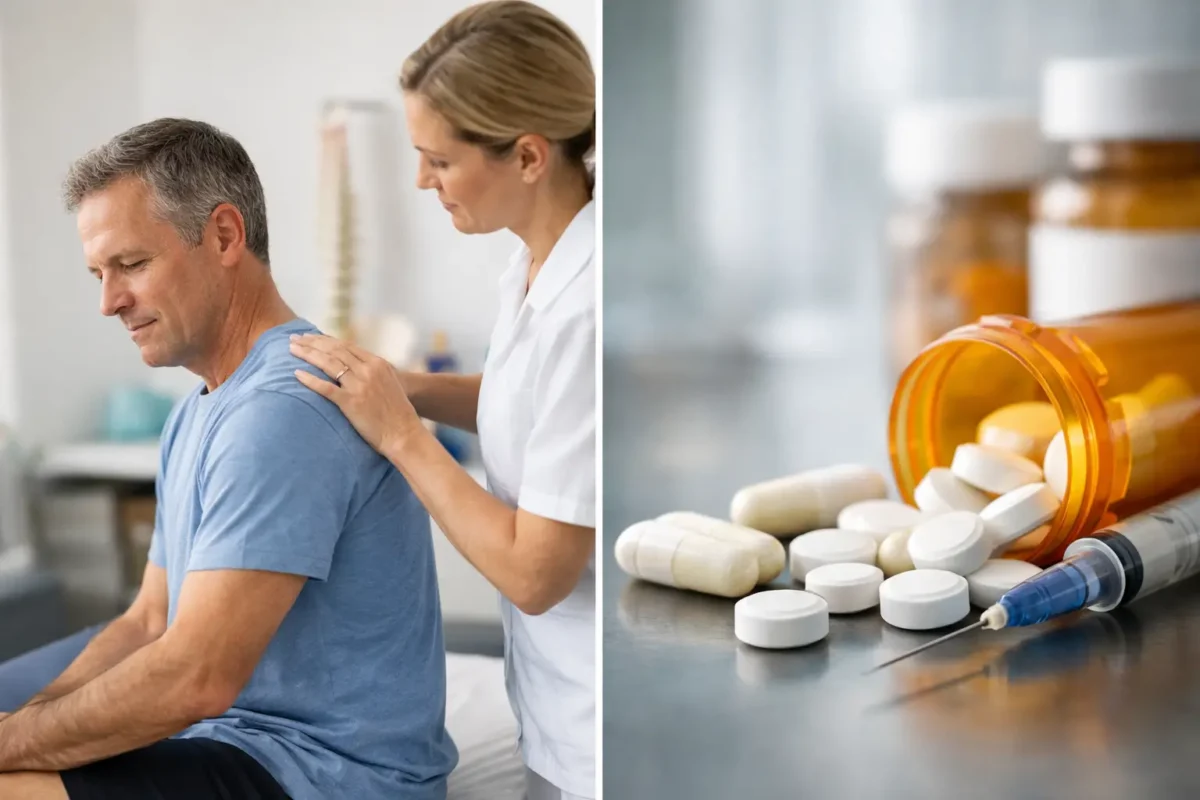
A patient with back pain may be given a prescription in minutes, yet the pain itself can remain untouched for months. That gap helps explain how pain management reduces opioid use. When treatment focuses on the source of pain, function, and recovery instead of masking symptoms alone, many patients can rely less on opioid medication or avoid it altogether.
For people dealing with spine pain, joint injuries, nerve symptoms, or long-standing musculoskeletal conditions, opioids can seem like the fastest path to relief. In some cases, they may still have a limited, carefully monitored role. But they do not correct a disc problem, stabilize an injured joint, reduce poor movement patterns, or rebuild strength after injury. Effective pain management takes a broader view. It asks what is causing the pain, what is making it persist, and which combination of treatments can improve daily life with the least risk.
Why opioids alone often fall short
Opioids can reduce the perception of pain, but they do not treat many of the mechanical, inflammatory, or neurologic issues behind chronic discomfort. A patient with sciatica from a disc issue, for example, may feel temporary relief while the nerve irritation continues. Someone with knee pain from arthritis may get short-term symptom control without improving strength, stability, or gait.
There are also trade-offs. Opioids can cause sedation, constipation, nausea, mental fog, tolerance, and dependence. For working adults, parents, athletes, and older adults, those side effects can interfere with the very goals that matter most – staying mobile, sleeping better, returning to work, and functioning safely. The question is not simply whether pain can be numbed. The question is whether treatment helps the patient recover.
How pain management reduces opioid use in real practice
The most effective pain management plans do not rely on a single tool. They combine accurate diagnosis, conservative treatment, physical rehabilitation, and ongoing reassessment. That integrated approach often reduces opioid use because patients gain other ways to control symptoms and improve function.
A thorough evaluation is the starting point. Pain in the neck, back, shoulder, hip, or knee can come from several structures at once. Without a careful exam and, when needed, diagnostic imaging or specialist assessment, treatment can miss the main driver. Once the cause is identified more clearly, care can become more targeted.
That matters because targeted treatment changes the equation. If inflammation is the main issue, anti-inflammatory strategies may help more than stronger pain medication. If muscle imbalance, poor biomechanics, or weakness is contributing to pain, physical therapy may produce longer-lasting improvement. If a patient has nerve-related pain, image-guided procedures or focused interventions may reduce symptoms while avoiding long-term medication reliance.
Treating the source, not just the symptom
Pain management works best when it addresses what is keeping tissue irritated or movement limited. For some patients, that means guided physical therapy to restore strength, flexibility, and joint support. For others, it may include chiropractic care, acupuncture, sports medicine treatment, or interventional pain procedures as part of a larger plan.
This is where coordinated outpatient care can make a real difference. When physicians, therapists, and rehabilitation providers communicate directly, treatment tends to become more precise and less fragmented. A patient is not left trying to coordinate separate opinions from disconnected offices. Instead, the plan can evolve based on response, setbacks, and measurable progress.
That kind of continuity supports lower opioid use because patients are not waiting weeks between each next step while relying on medication to get through the gap. They are moving through an active treatment pathway.
Physical therapy and rehabilitation change pain over time
One of the clearest examples of how pain management reduces opioid use is physical rehabilitation. Many painful conditions worsen because pain leads to less movement, less movement leads to weakness and stiffness, and weakness and stiffness lead to more pain. Opioids do little to break that cycle.
A well-designed rehabilitation program can. Physical therapy helps restore mobility, improve posture and mechanics, strengthen supporting muscles, and build tolerance for daily activity. This does not always create instant relief, and that is an important point. Conservative care can require time and consistency. But the trade-off is that it aims for durable improvement rather than short-lived symptom suppression.
For patients recovering from injury, surgery, work-related strain, or a motor vehicle accident, this approach is especially valuable. Reducing pain while rebuilding function often lowers the need for stronger medication. It also helps patients feel more in control of their recovery.
Interventional care can reduce the need for medication
Not every patient improves with exercise and time alone. Some need additional support to calm pain enough to participate in therapy and daily life. In those cases, interventional pain management may help reduce opioid use by providing targeted relief.
Procedures such as joint injections, epidural injections, nerve-focused treatments, or other image-guided options can be useful for the right condition and the right patient. They are not a cure-all, and results vary. Still, when used appropriately, they can reduce pain at its source, improve participation in rehab, and limit the need for ongoing medication escalation.
This is one reason multidisciplinary care matters. If a patient is evaluated by pain management, rehabilitation, and spine specialists in a coordinated setting, treatment decisions can be made in context. The goal is not to add procedures unnecessarily. It is to use the least invasive, evidence-based option that helps the patient move forward.
Pain care should be individualized
There is no universal formula for reducing opioid use. Acute pain after an injury may be managed differently from chronic degenerative pain. Nerve pain behaves differently than muscle strain. A patient with multiple medical conditions may need a more cautious medication plan than a younger athlete recovering from a sports injury.
That is why individualized care is so important. A good pain management plan considers the diagnosis, symptom severity, work demands, sleep issues, activity level, mental stress, and prior treatment history. It also considers patient goals. Some people want to get back to the gym. Others want to sit through a workday, drive comfortably, or walk without fear of flare-ups.
When treatment is built around real-life function, opioid reduction becomes more realistic. Patients are not just being told to take less medication. They are being given better options.
The role of monitoring and follow-up
Reducing opioid use safely requires follow-up. Pain levels change. Function changes. Treatment response changes. A plan that made sense at the first visit may need adjustment two weeks later.
Regular reassessment allows clinicians to taper medication thoughtfully when appropriate, add supportive therapies when needed, and identify when a condition requires a different level of care. It also helps prevent a common problem in pain treatment: staying on a medication plan simply because no one has stepped back to reassess the full picture.
At a coordinated center such as Denville Medical Associates, that continuity can be especially helpful for patients who do not want to bounce between multiple offices to get answers. When care is aligned, decisions are often faster, clearer, and better matched to recovery goals.
What patients should expect from a modern pain management plan
A strong pain management plan should feel active, not passive. Patients should understand what may be causing their pain, what treatments are being recommended, how progress will be measured, and what the next step is if symptoms do not improve. They should also know that reducing opioid use does not mean dismissing pain. It means treating pain more comprehensively.
For some patients, that may include short-term medication support while other therapies take effect. For others, it may mean avoiding opioids from the start because better alternatives are available. The right plan depends on the diagnosis and the person in front of the clinician.
What matters most is that pain care should open doors – back to work, back to movement, back to sleep, back to daily life. When treatment is coordinated, evidence-based, and focused on the source of pain, patients often need less opioid medication because they are finally getting the kind of care that helps them heal.