
Pain Management vs Spine Surgery
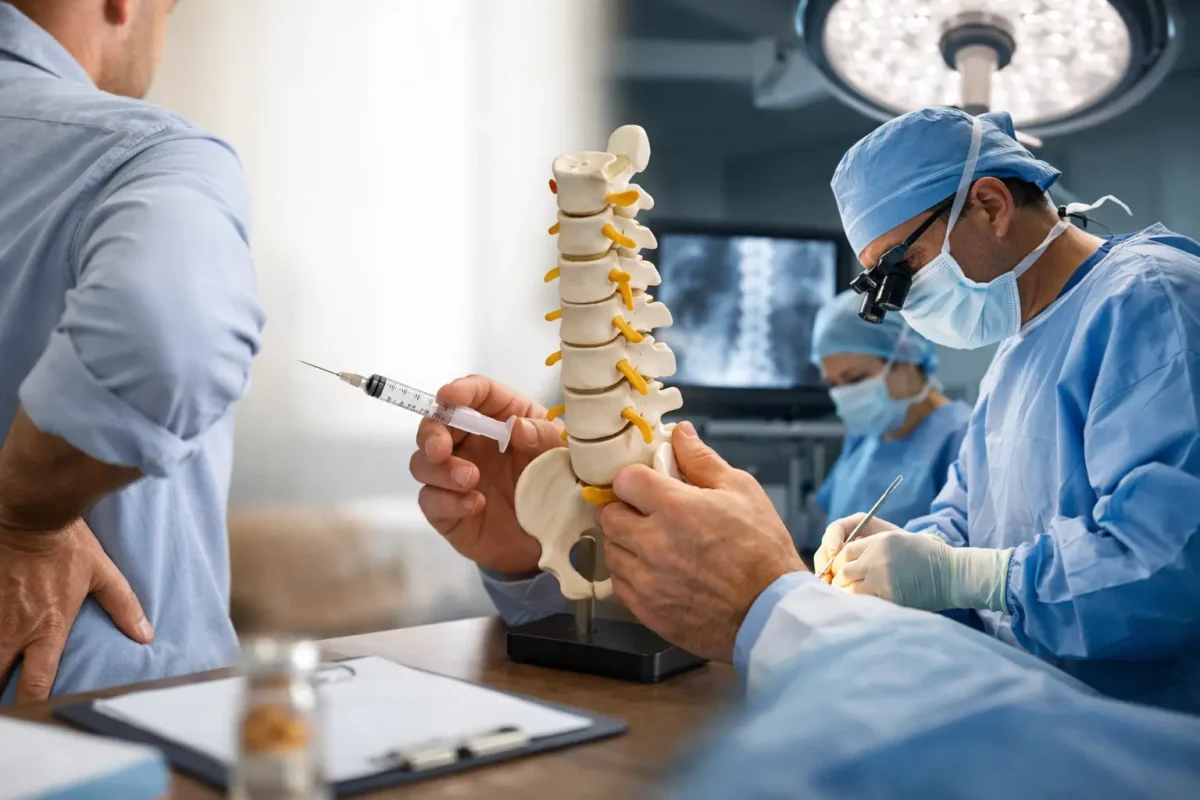
A patient with back pain rarely walks in asking for a steroid injection or an operation. Most people want the same thing – less pain, better movement, and a clear answer about what to do next. That is why the question of pain management vs spine surgery matters so much. It is not simply about choosing one specialty over another. It is about finding the right level of care at the right time, based on your symptoms, imaging, function, and response to treatment.
For many adults dealing with neck pain, low back pain, sciatica, herniated discs, spinal stenosis, or degenerative changes, the best path is not immediately obvious. Some conditions improve with conservative treatment. Others continue to worsen despite therapy, medication, and procedures. The goal is to avoid both extremes – delaying necessary surgery for too long or moving toward surgery before less invasive options have been fully explored.
Pain management vs spine surgery: what is the difference?
Pain management and spine surgery serve different roles, even though they often treat the same underlying conditions. Pain management focuses on reducing symptoms, improving function, and helping patients return to daily life with as little disruption as possible. This may include image-guided injections, medication management, physical therapy coordination, activity modification, and other non-surgical treatments designed to calm inflammation, reduce nerve irritation, and support recovery.
Spine surgery, by contrast, is typically considered when there is a structural problem that is unlikely to improve enough with conservative care alone. Surgery may be used to decompress a pinched nerve, stabilize an unstable segment of the spine, or address severe disc or bone-related issues that are driving persistent pain, weakness, or loss of function.
Neither approach is inherently better in every case. The better option depends on the diagnosis, the severity of symptoms, how long the problem has been present, and whether there are warning signs such as progressive weakness, significant nerve compression, or loss of bowel or bladder control that require urgent evaluation.
When pain management is often the right first step
Most spine-related pain does not begin in an operating room. It begins with evaluation, conservative care, and close follow-up. That approach is grounded in evidence and common sense. Many episodes of back or neck pain improve over time when inflammation is controlled, movement is restored, and the body is given the right support.
Pain management is often the preferred first step when symptoms are moderate, imaging findings are not clearly surgical, or the patient is still early in the course of treatment. Someone with a disc bulge, mild to moderate stenosis, facet joint pain, or radiating nerve pain may benefit from targeted injections, rehabilitation, and physician-guided care before surgery is even on the table.
This approach can also be especially valuable for patients who want to remain active and working while avoiding unnecessary downtime. A well-timed epidural injection, for example, may reduce inflammation enough to make physical therapy more productive. In other cases, treating pain conservatively gives the care team time to see whether symptoms are resolving naturally or whether they are becoming more persistent and limiting.
That said, pain management is not just about temporary relief. Done well, it is part of a broader treatment plan focused on restoring function. The best outcomes usually come when pain specialists work closely with physical therapists, rehabilitation providers, and spine experts instead of treating pain in isolation.
When spine surgery becomes the better option
Surgery tends to enter the conversation when conservative care has been appropriate and thorough, but the patient is still not improving enough. Persistent pain alone does not always mean surgery is necessary, but persistent pain combined with neurologic symptoms, structural compression, or worsening limitations may shift the balance.
A patient with severe sciatica caused by a large disc herniation, for instance, may try medication, injections, and therapy first. If those measures fail and the pain remains disabling, surgery may offer a more direct solution. The same is true when there is spinal instability, advanced stenosis, or nerve compression that is leading to weakness, numbness, balance problems, or reduced ability to walk.
There are also cases where surgery should not be delayed. Progressive neurologic loss, significant motor weakness, and symptoms suggesting cauda equina syndrome require immediate medical attention. In those situations, the issue is no longer just comfort. It is protection of nerve function and long-term quality of life.
Surgery can be highly effective for the right diagnosis, but it is still surgery. Recovery time, post-operative rehabilitation, procedural risks, and the patient’s overall health all matter. A thoughtful surgical recommendation should explain not only what the procedure aims to fix, but also what it cannot guarantee. Even technically successful surgery may not erase every source of pain, especially if multiple pain generators are involved.
The gray area between conservative care and surgery
Most real-world decisions are not straightforward. Many patients fall into a middle category where both pain management and spine surgery are reasonable to discuss. This is where coordinated evaluation becomes especially valuable.
Consider a patient with spinal stenosis who can still function, but only with frequent stops when walking. Or someone with a herniated disc whose pain improves after an injection, then returns months later. Or an older adult with degenerative changes on MRI but symptoms that do not perfectly match the imaging. In each of these cases, the answer depends on more than a scan.
Doctors need to look at symptom pattern, physical exam findings, nerve involvement, lifestyle demands, prior treatment response, and patient goals. A construction worker, a retired adult who wants to remain independent, and a competitive athlete may all make different decisions about the same diagnosis. Good care takes those differences seriously.
This is also why fragmented care can be frustrating. When patients bounce between disconnected offices, they may receive conflicting advice without a unified plan. One specialist may focus on procedures, another on imaging, and another on surgery, while the patient is left trying to sort through it all alone.
Why coordinated care improves the decision
The best pain management vs spine surgery decision usually comes from collaboration, not competition. Patients benefit when pain specialists, spine surgeons, physical therapists, and diagnostic teams can evaluate the same problem from different angles and communicate directly.
In an integrated outpatient setting, treatment can progress in a logical sequence. A patient may start with imaging and a specialist evaluation, move into physical therapy and non-invasive treatment, and then, if needed, receive interventional pain care or a surgical consultation without restarting the process at every step. That continuity reduces delays, minimizes confusion, and helps patients feel that the plan is built around outcomes rather than handoffs.
For a practice like Denville Medical Associates, this model supports a key principle: start with evidence-based conservative care whenever appropriate, but do not lose sight of surgical options when they become medically necessary. Patients should not feel pressured toward surgery, and they should not feel stranded in endless temporary treatment either. They deserve a plan that adapts to their progress.
Questions patients should ask before deciding
If you are comparing treatment paths, the most useful question is not Which specialty is better? It is What is driving my pain, and what is the least invasive effective way to treat it?
Patients should understand whether their diagnosis is primarily inflammatory, mechanical, degenerative, or neurologic. They should ask whether there are signs of nerve damage, whether conservative care has been long enough and specific enough, and what functional improvement is realistic with each option. It is also worth asking what happens if you wait, and what happens if you proceed now.
A careful doctor should be able to explain why a treatment is recommended, what success looks like, and how the next step will be measured. That conversation matters as much as the treatment itself.
Choosing the right path for your spine
The right decision is rarely about choosing pain management or spine surgery in the abstract. It is about choosing the treatment path that fits your condition now, while keeping future options open. Some patients improve significantly without surgery. Others reach a point where surgery offers the clearest route to lasting relief and restored function.
What matters most is being evaluated by a team that sees the full picture, takes your symptoms seriously, and does not force a one-size-fits-all answer. When care is coordinated, patients can move forward with more confidence, less confusion, and a treatment plan that respects both their time and their long-term health.
If your back or neck pain has become a daily obstacle, the next best step is not guessing. It is getting a thorough evaluation from clinicians who can help you understand what your spine is telling you and what your options really are.