
When Nerve Pain After an Injury Needs Care
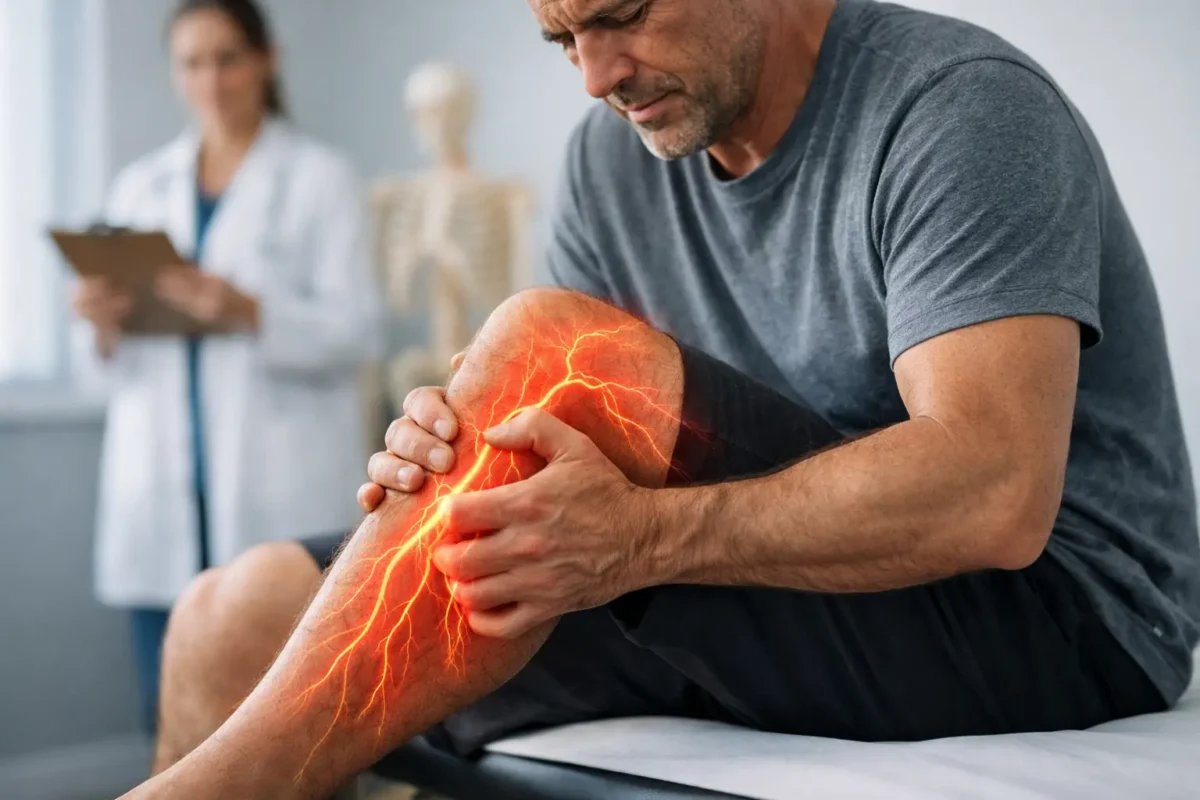
A sprained ankle, a car accident, a fall, or a lifting injury can leave more than a sore muscle behind. Nerve pain after injury often feels different from typical bruising or stiffness: it may burn, tingle, shoot, buzz, or create numb patches that do not seem to match the visible injury. Those symptoms deserve a thoughtful evaluation, especially when they interfere with sleep, walking, work, or normal movement.
Pain is the body’s warning system, but nerve-related pain can persist after the original tissue injury begins to heal. Identifying the source early can help prevent unnecessary delays, reduce irritation of the affected nerve, and create a treatment plan that supports a safe return to activity.
What Nerve Pain After Injury Can Feel Like
Nerves carry messages between the brain, spinal cord, skin, muscles, and organs. When a nerve is stretched, compressed, inflamed, or damaged during an injury, those messages can become distorted. Rather than registering only pain at the injured area, a person may feel sensations that travel along the nerve’s path.
Common symptoms include sharp or electric-shock sensations, burning pain, pins and needles, numbness, sensitivity to light touch, or weakness in a hand, arm, foot, or leg. Some people describe a feeling like their limb has fallen asleep, while others notice pain that radiates from the neck into the arm or from the low back through the buttock and leg.
The pattern matters. A strained muscle generally hurts when that muscle is used or pressed. Nerve pain may travel, occur at rest, worsen at night, or be accompanied by altered sensation or muscle weakness. That does not mean every tingling sensation signals serious nerve damage, but it does mean the symptoms should not simply be ignored if they persist or progress.
Why Injuries Can Irritate Nerves
An injury does not have to directly cut a nerve to affect it. Swelling, inflammation, joint misalignment, a herniated disc, scar tissue, or protective muscle spasm can place pressure on nearby nerve structures. A forceful impact may also stretch a nerve, particularly in the neck, shoulder, wrist, hip, knee, or ankle.
After a motor vehicle accident, for example, a person may develop neck pain and arm tingling due to irritation of a cervical nerve root. After lifting or twisting, low back pain with leg symptoms may be related to irritation around a lumbar nerve root, often called sciatica. Sports injuries can affect peripheral nerves around the shoulder, elbow, knee, or ankle, while a fracture or surgical repair may lead to swelling that temporarily irritates nearby nerves.
Not all radiating pain has the same cause. Pain may arise from a spinal disc, joint, tendon, muscle, peripheral nerve, or more than one structure at once. This is why a careful examination is more useful than relying on symptoms alone or assuming that an imaging result tells the entire story.
When Symptoms Need Prompt Medical Attention
Some nerve symptoms should be assessed urgently. Seek immediate emergency care for new loss of bowel or bladder control, numbness in the groin or saddle area, sudden or rapidly worsening weakness, difficulty walking, facial drooping, trouble speaking, or severe symptoms after a major accident.
Prompt medical evaluation is also appropriate when pain is severe and escalating, numbness is spreading, a limb becomes unusually pale, cold, or swollen, or symptoms follow a fracture, deep cut, or crush injury. These signs can point to conditions that need timely treatment to protect nerve function and circulation.
For less urgent symptoms, it is still reasonable to schedule an evaluation if tingling, burning, numbness, or radiating pain lasts more than a few days, returns repeatedly, or prevents normal activity. People with diabetes, circulation concerns, prior spine problems, or a history of neuropathy may need earlier assessment because several factors can contribute to nerve symptoms.
How Clinicians Identify the Source of Nerve Symptoms
A useful evaluation begins with the story of the injury. The timing, location, mechanism, changes in symptoms, and activities that make pain better or worse can all offer meaningful clues. A clinician will also ask about prior injuries, surgeries, medical conditions, and medications.
The physical examination may include testing strength, reflexes, sensation, balance, range of motion, posture, and gait. Specific movements can help distinguish pain coming from the spine from pain related to a peripheral nerve or local joint injury.
Imaging is sometimes needed, particularly after significant trauma or when symptoms suggest a structural issue. X-rays may help identify fractures or alignment concerns, while MRI can provide more detail about discs, soft tissues, and nerve compression. In selected cases, electrodiagnostic testing may assess how well nerves and muscles are functioning. The right test depends on the symptoms and examination findings. More testing is not always better if it will not change the treatment plan.
Treatment Depends on the Cause and the Recovery Stage
The goal is not only to reduce pain, but also to address the underlying irritation and restore confident movement. Many patients improve with conservative care, particularly when treatment is tailored to the source of symptoms and adjusted as recovery progresses.
Early treatment may include activity modification, targeted anti-inflammatory strategies when medically appropriate, and physical therapy designed to improve mobility without aggravating the nerve. Rest can be helpful immediately after an injury, but prolonged inactivity can contribute to stiffness, weakness, and fear of movement. The right balance depends on the injury, pain level, and clinical findings.
Rehabilitation and movement-based care
Physical therapy can help restore motion, improve strength, and correct movement patterns that continue to overload an irritated area. For neck- or back-related nerve pain, therapy may include posture training, core stabilization, graded strengthening, and carefully selected nerve mobility exercises. These exercises should be specific to the diagnosis. Aggressive stretching or forcing painful movements can worsen symptoms in some cases.
Chiropractic care, acupuncture, or other complementary approaches may also be appropriate for selected patients as part of a broader plan. These options are not substitutes for evaluation when weakness, progressive numbness, or significant trauma is present. Their role should be based on the diagnosis, comfort level, and measurable response to treatment.
Pain management when symptoms limit progress
If nerve pain remains intense enough to disrupt sleep, work, or rehabilitation, pain management options may help create a more workable path forward. Depending on the diagnosis, this may include medications directed at nerve pain, targeted injections to reduce inflammation around an irritated nerve, or other interventional treatments.
Medication can be useful, but it is rarely the whole solution. Some medications have side effects such as drowsiness, dizziness, or interactions with other prescriptions. A patient-centered plan considers those trade-offs, especially for older adults, people with demanding jobs, and anyone who needs to drive or operate equipment.
When surgery becomes part of the conversation
Surgery is not the starting point for most cases of nerve pain after an injury. It may be considered when there is significant nerve compression, progressive weakness, instability, a severe structural injury, or persistent symptoms that have not improved with well-directed conservative care.
When surgery is being considered, the decision should be grounded in the full clinical picture: symptoms, physical findings, imaging, functional limitations, and the patient’s goals. A scan may show a disc bulge or degenerative change that is not actually causing the symptoms. Conversely, a person with clear weakness or nerve loss may need more urgent specialist guidance even if their pain is not dramatic.
The Value of Coordinated Care During Recovery
Nerve symptoms often cross specialties. A patient may need diagnostic evaluation, rehabilitation, pain management, sports medicine input, or spine consultation at different points in recovery. When those clinicians communicate directly, treatment can be adjusted more efficiently and unnecessary duplication may be reduced.
At Denville Medical Associates, patients can access coordinated outpatient care from specialists and rehabilitation providers in one location. This approach supports a non-invasive, evidence-based path first while making specialist consultation available when symptoms or recovery milestones call for it. For a working parent, an athlete, or someone recovering from an accident, that continuity can make it easier to stay focused on progress rather than managing disconnected appointments.
What You Can Do While Waiting for an Evaluation
Avoid repeatedly testing a painful area or pushing through movements that trigger shooting pain, numbness, or weakness. Gentle movement is often preferable to complete immobility, but the activity should stay within tolerable limits. Notice where symptoms travel, what brings them on, and whether weakness or numbness is changing. Those details can help guide your evaluation.
If pain follows an accident or work injury, document when symptoms began and how they have affected daily tasks. Most importantly, do not treat increasing weakness, spreading numbness, or loss of coordination as something to wait out. Early, coordinated care can help protect function and give you a clearer route back to the activities that matter to you.