
Physical Therapy and Rehabilitation Services
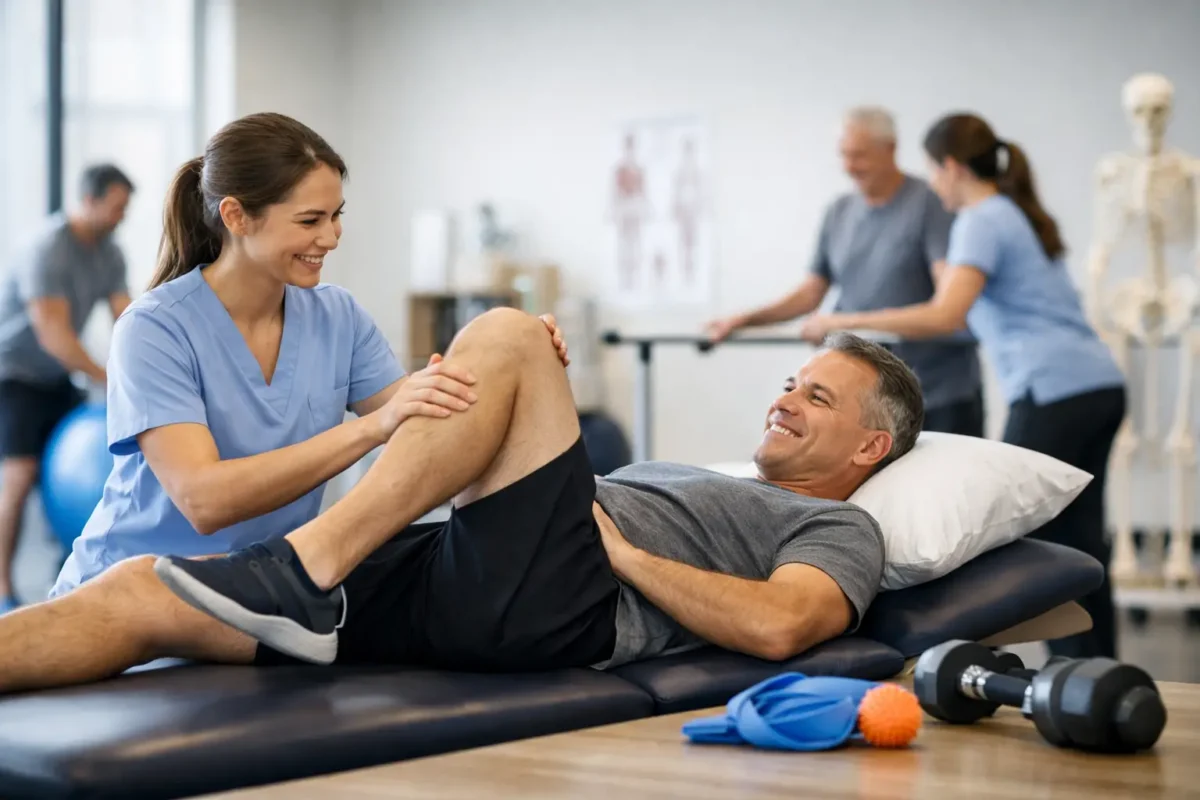
A knee that still swells weeks after a fall, back pain that keeps flaring up during your commute, or shoulder stiffness that makes sleep difficult – these are the moments when people start looking seriously at physical therapy and rehabilitation services. Not because they want a long, complicated medical process, but because they want to move better, hurt less, and get back to work, exercise, family life, and everyday routines.
For many adults, the challenge is not deciding whether they need help. It is figuring out where to go and whether the care plan will actually make sense. Rehabilitation works best when it is not treated as a disconnected service. A strong program starts with the right diagnosis, continues with a personalized therapy plan, and adjusts as your body responds. That kind of continuity matters whether you are recovering from an injury, managing a chronic condition, or trying to avoid more invasive treatment.
What physical therapy and rehabilitation services really include
Physical therapy is often associated with exercise, stretching, and post-injury recovery, and those are certainly part of it. But comprehensive physical therapy and rehabilitation services do more than guide movement drills. They are designed to restore function, improve strength and flexibility, reduce pain, and help patients return to daily activities with more confidence and less risk of reinjury.
In an outpatient setting, rehabilitation may address spine pain, sports injuries, joint problems, post-surgical recovery, arthritis-related stiffness, balance issues, work injuries, and motor vehicle accident injuries. Treatment can include therapeutic exercise, manual therapy, mobility training, posture correction, neuromuscular re-education, and guided progression back to activity.
The plan should never be one-size-fits-all. A younger athlete recovering from an ankle sprain needs a different strategy than an older adult with lumbar stenosis. Someone with a herniated disc may improve with targeted therapy and pain management support, while another patient may need imaging, specialist evaluation, and a longer period of supervised rehabilitation. Effective care begins by recognizing those differences instead of forcing every patient into the same timeline.
Why coordinated rehabilitation usually works better
One of the biggest frustrations patients face is fragmentation. They see one provider for the initial injury, another for imaging, another for therapy, and a different specialist if the pain continues. Each visit can feel like a restart. Records may not transfer quickly, treatment recommendations may not align, and patients are left trying to connect the dots while they are already uncomfortable.
Coordinated care changes that experience. When physicians, therapists, and specialists communicate directly, rehabilitation tends to become more efficient and more precise. The therapy team understands the diagnosis. The diagnosing provider can track functional progress. If pain is limiting movement, that issue can be addressed without delaying the entire recovery process. If conservative treatment is working, everyone stays on the same path. If it is not, the next step becomes clearer sooner.
That model is especially valuable for conditions that sit in the gray area between simple and complex. Neck pain with radiating symptoms, persistent low back pain, shoulder impingement, sciatica, joint degeneration, and post-accident injuries often require more than a basic exercise sheet. They benefit from a setting where clinical decisions are connected, not scattered.
When to seek physical therapy and rehabilitation services
Some patients start therapy right after a diagnosis. Others wait until pain has disrupted sleep, exercise, or work for months. While not every ache requires formal treatment, waiting too long can make recovery harder. Compensatory movement patterns develop quickly. Muscles weaken. Stiffness increases. Fear of movement can set in even when the underlying issue is treatable.
You should consider evaluation if pain persists beyond a reasonable healing period, keeps returning, or starts affecting normal activities. Limited range of motion, weakness, balance changes, nerve symptoms, reduced endurance, and difficulty walking, lifting, or climbing stairs are also signs that rehabilitation may be appropriate.
This is also true after procedures or surgeries. Good rehabilitation is not simply about healing tissue. It is about restoring function safely. Patients often feel better when they understand what to expect at each stage rather than guessing whether discomfort is normal or whether they are progressing fast enough.
What a good rehab plan should look like
The best rehab plans are specific, measurable, and adaptable. Early sessions may focus on pain reduction, swelling control, mobility, and movement quality. As symptoms improve, treatment should progress toward strength, stability, endurance, and return to work or recreational activity.
That progression matters. If a plan stays too passive for too long, patients may feel temporary relief but fail to rebuild function. If it becomes too aggressive too early, symptoms can flare and confidence drops. Good rehabilitation finds the middle ground – enough challenge to create progress, enough clinical judgment to protect healing structures.
A well-designed plan should also explain the why behind treatment. Patients do better when they understand how posture, movement mechanics, core stability, joint mobility, and muscle imbalances affect symptoms. Education is not an extra. It helps people recognize triggers, pace activity, and stay consistent between visits.
Physical therapy and rehabilitation services for common conditions
In a multidisciplinary outpatient center, rehabilitation often supports a wide range of musculoskeletal and pain-related concerns. Back and neck pain are among the most common. These cases may involve disc issues, degenerative changes, muscle strain, poor ergonomics, nerve irritation, or a combination of factors. Therapy can improve mobility and strength, while close coordination with pain management or spine specialists helps when symptoms are more persistent.
Joint injuries are another major category. Knees, shoulders, hips, and ankles often respond well to guided rehabilitation, especially when treatment starts before compensation patterns become entrenched. Sports injuries require careful progression because returning too soon can reset the recovery timeline. For active adults, the goal is not just to feel better at rest. It is to move well under real-world demands.
Older adults often seek rehabilitation for balance decline, arthritis, gait changes, or reduced function after illness or injury. Here, success may look different than it does for a competitive athlete. The goal may be safer walking, less pain with stairs, improved independence, or confidence getting through a full day without symptom escalation. Those outcomes are just as meaningful.
Why non-invasive care should come first
For many conditions, conservative treatment is the right first step. That does not mean every case will avoid procedures or surgery, but it does mean patients deserve a full evaluation of non-invasive options before moving to more aggressive interventions. Physical therapy is often central to that process because it addresses mechanics, strength deficits, mobility loss, and functional limitations that medication alone does not fix.
There is also a practical benefit. When therapy is integrated with specialist care, patients do not have to choose between being taken seriously and being treated conservatively. They can receive evidence-based rehabilitation while knowing that physician oversight is available if symptoms change, progress stalls, or diagnostic clarification is needed.
That level of support can reduce unnecessary emergency room visits and help patients avoid the cycle of short-term symptom management without a longer-term recovery plan.
What patients should expect from an outpatient team
A strong outpatient rehabilitation experience should feel organized, responsive, and individualized. You should know who is directing your care, what the working diagnosis is, what the next phase of treatment looks like, and how improvement will be measured. You should also feel heard when something is not working.
At Denville Medical Associates, that coordinated approach is built into the care model. Patients can access evaluation, conservative treatment, rehabilitation, specialist insight, and, when appropriate, surgical guidance in one location. For people dealing with pain, injury, or recovery after a procedure, that means fewer gaps in communication and a clearer path forward.
It is also worth remembering that progress is not always linear. Some weeks bring obvious gains. Others are slower and require plan adjustments. A patient-centered team accounts for that reality. The goal is not to push a generic protocol. It is to help each patient make meaningful, steady progress based on their condition, daily demands, and long-term goals.
If you are considering physical therapy and rehabilitation services, look for a setting that treats recovery as more than a series of appointments. The right care plan should help you understand your condition, reduce pain, rebuild function, and move forward with confidence that your treatment is connected from start to finish.